
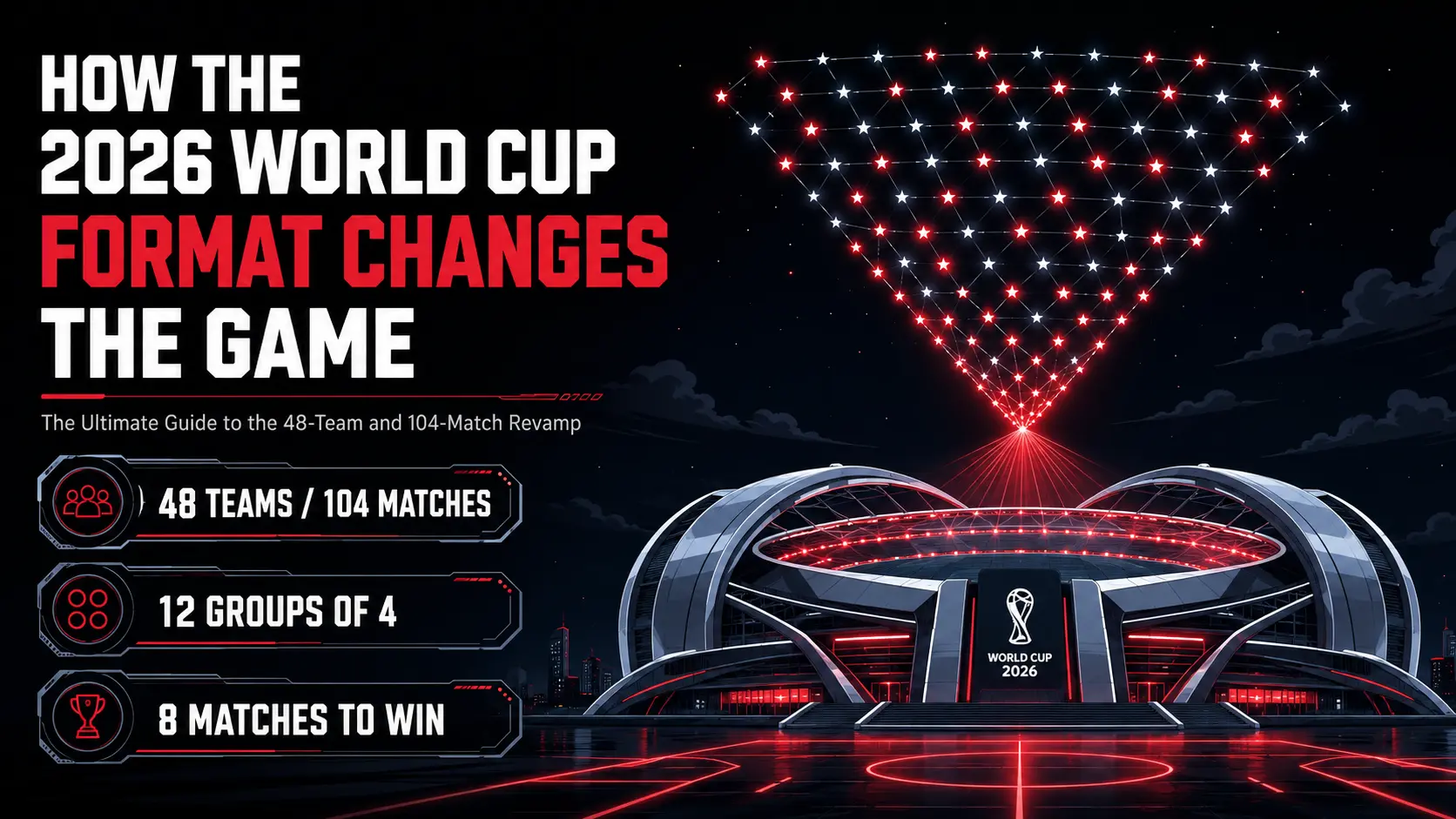
The 2026 FIFA World Cup marks a historic turning point in international sports, presenting football fans with an extensive structural revamp that can initially seem overwhelming to navigate. Designed as the ultimate blueprint to help viewers make sense of these sweeping updates, this comprehensive guide clarifies the revolutionary 48-team expansion and its massive impact on the global tournament schedule. Readers will gain a clear understanding of the newly adopted 12 groups of four setup, which replaces older three-team group proposals to preserve competitive integrity, as well as the addition of the high-stakes Round of 32 knockout phase. By addressing common pain points regarding the expanded 104 matches, player travel fatigue, and complex qualification pathways, this definitive analysis ensures that football supporters—especially passionate fans across Kenya—are fully prepared to follow their favorite teams. With only six days left until the tournament begins, this article serves as your essential companion to understanding how this historic event will unfold across North America.
👉 Official Recommendation: Visit the FIFA Official Tournament Hub to explore the latest official news, complete match schedules, participating team rosters, and updated group standings!
How does the 2026 FIFA World Cup redefine the global game with its new format?
The 2026 FIFA World Cup introduces the most radical layout shift in modern football history by expanding the participant list from 32 to 48 nations. This historic tournament, starting in just six days on June 11, 2026, implements a world cup 2026 format designed to maximize global representation while ensuring high-stakes entertainment. By increasing the total matches to 104, its new setup is set to generate unprecedented engagement across the globe.
Why did the FIFA Council approve a format of twelve groups of four?
The FIFA Council approved a structure of twelve groups of four to eliminate the collusion risk associated with three-team groups. This critical decision, finalized after extensive debate, ensures that the final matches of each group are played simultaneously. It prevents scenarios where two teams could deliberately play to a specific result to eliminate a third competitor, thereby preserving the competitive integrity of the preliminary phase.
How does the historic expansion to 104 matches impact Kenyan football fans?
The expansion to 104 matches means Kenyan football fans can engage with an unprecedented volume of world-class action across multiple official channels. This massive increase in matches, running over a prolonged 39-day period, gives local fans more opportunities to follow elite international football. For many in Kenya, planning ahead and mapping out the schedule is the ideal way to stay updated with every single highly anticipated matchup.
How do the best third-placed teams secure qualification under the new tournament rules?
The best third-placed teams represent a crucial qualification avenue that keeps the group stage highly competitive until the very last whistle. In this revamped framework, only twelve group winners and twelve runners-up qualify automatically, leaving eight spots open for those finishing third [1]. This system ensures that almost every group match remains meaningful, as even a single victory or goal could propel a third-place country into the next phase [1].
What is the mathematical probability of a Group of Death in 2026?
The mathematical probability of a “Group of Death” in 2026 is significantly lower due to the dilution of the group stages under the 48-team framework. “Group of Death Probability” is a statistical metric that measures the likelihood of multiple elite teams being drawn into the same group, and under this new structure, its percentage has decreased considerably. This statistical shift occurs because the top-seeded nations are spread across twelve distinct groups rather than eight, meaning traditional powerhouses have a much safer passage into the knockout rounds.
How do tiebreakers determine final team rankings when group stage points are equal?
Tiebreakers are the official regulatory criteria that resolve ranking deadlocks when teams finish the group phase with identical points [2]. These rules prioritize overall goal difference first, followed by total goals scored, and then head-to-head records [2]. In highly contested matches played with the official Trionda ball, these minute statistical margins will ultimately decide who secures the final knockout berths.
Why does the Round of 32 create a longer and more challenging path to the final?
The Round of 32 is the newly added knockout stage that fundamentally changes the physical and mental demands of winning the trophy [5]. It serves as the initial single-elimination round, meaning teams can no longer rely on group-stage recovery. This extra layer of competition transforms the path to victory into an exhausting test of endurance.
| Tournament Feature | 2022 FIFA World Cup (Qatar) | 2026 FIFA World Cup (North America) |
|---|---|---|
| Total Teams | 32 | 48 |
| Total Matches | 64 | 104 |
| Group Stage Setup | 8 Groups of 4 | 12 Groups of 4 |
| Knockout Stage Starts At | Round of 16 | Round of 32 |
| Matches to Win Trophy | 7 | 8 |
| Tournament Duration | 29 Days | 39 Days |
How does the single-elimination bracket change the route to MetLife Stadium?
The single-elimination bracket dictates that any slip-up during the knockout phase will instantly end a nation’s journey to MetLife Stadium [3]. This unforgiving setup leaves zero room for error, ramping up the tension from the very first match on June 28, 2026 [3]. The eventual finalists will have to display exceptional tactical execution to book their ticket to the iconic New Jersey venue for the final on July 19 [3].
Why do final teams need to survive eight matches to win the trophy?
Final teams must survive eight matches to win the trophy under the 2026 regulations, adding one extra high-intensity game compared to previous tournaments [2, 5]. This grueling expansion tests the depth of every squad to its absolute limit. Managers must rotate their players wisely to sustain peak performance through eight consecutive matches over the 39-day duration [2, 5].
How will players handle the immense challenges of travel logistics and summer heat?
Player fatigue and recovery logistics represent the most critical operational challenges for teams traveling across three massive host nations [2]. Elite athletes must cope with rapid changes in altitude, climate, and multiple time zones as they fly between the USA, Canada, and Mexico [2]. Navigating these vast distances requires state-of-the-art sports science and meticulously planned itineraries.
How do team managers minimize player fatigue and recovery logistics across three nations?
Team managers minimize player fatigue and recovery logistics by establishing localized base camps and utilizing private chartered flights. These strategic measures allow players to rest immediately after matches and avoid the exhausting delays of commercial travel. By keeping transit times short, squads can maintain high physical performance despite the massive geographic scale of the tournament.
What advanced climate control technology keeps indoor stadiums safe and cool for athletes?
Climate Control Technology is a state-of-the-art ventilation and cooling system designed to regulate pitch-level temperatures in hot summer venues. It pumps massive volumes of chilled air directly onto the playing surface to safeguard player health under extreme heat. In addition to this machinery, FIFA has mandated 3-minute cooling breaks during matches to ensure optimal safety [2].
FAQ
Frequently asked questions about the upcoming 2026 tournament format help fans understand the essential competitive rules and scheduling details. These answers address common queries regarding the tournament’s historic expansion and match structures.
What is the format for the World Cup 26?
The format for the World Cup 26 features 48 teams divided into 12 groups of four [2]. This setup guarantees that every country plays a minimum of three matches before the knockout phase begins [2].
What is the knockout format for the World Cup 2026?
The knockout format for the World Cup 2026 begins with a new Round of 32 [5]. This phase follows a single-elimination system, meaning any losing team is instantly eliminated from the competition [1, 3].
How is the FIFA World Cup draw done in 2026?
The FIFA World Cup draw in 2026 was completed in December 2025 using a seeded potting system. This method distributed the 48 qualified countries across the 12 groups while separating teams from the same continental confederations where possible.
How many teams will play in 2026?
There are 48 teams that will play in 2026, marking a significant increase from the traditional 32-team lineup [2]. This historic expansion allows more nations from Africa, Asia, and other regions to compete on the grandest stage [1, 5].
What is the format for the World Cup play-off in 2026?
The format for the World Cup play-off in 2026 consists of an intercontinental mini-tournament. Six teams competed for the final two slots, providing a high-stakes dramatic prelude to the main event.
References
- 2026 FIFA World Cup (Wikipedia)
- 2026 FIFA World Cup knockout stage (Wikipedia)
- FIFA World Cup 2026™ (FIFA Official Website)
- How the FIFA World Cup 26™ will work with 48 teams (FIFA Official Website)