
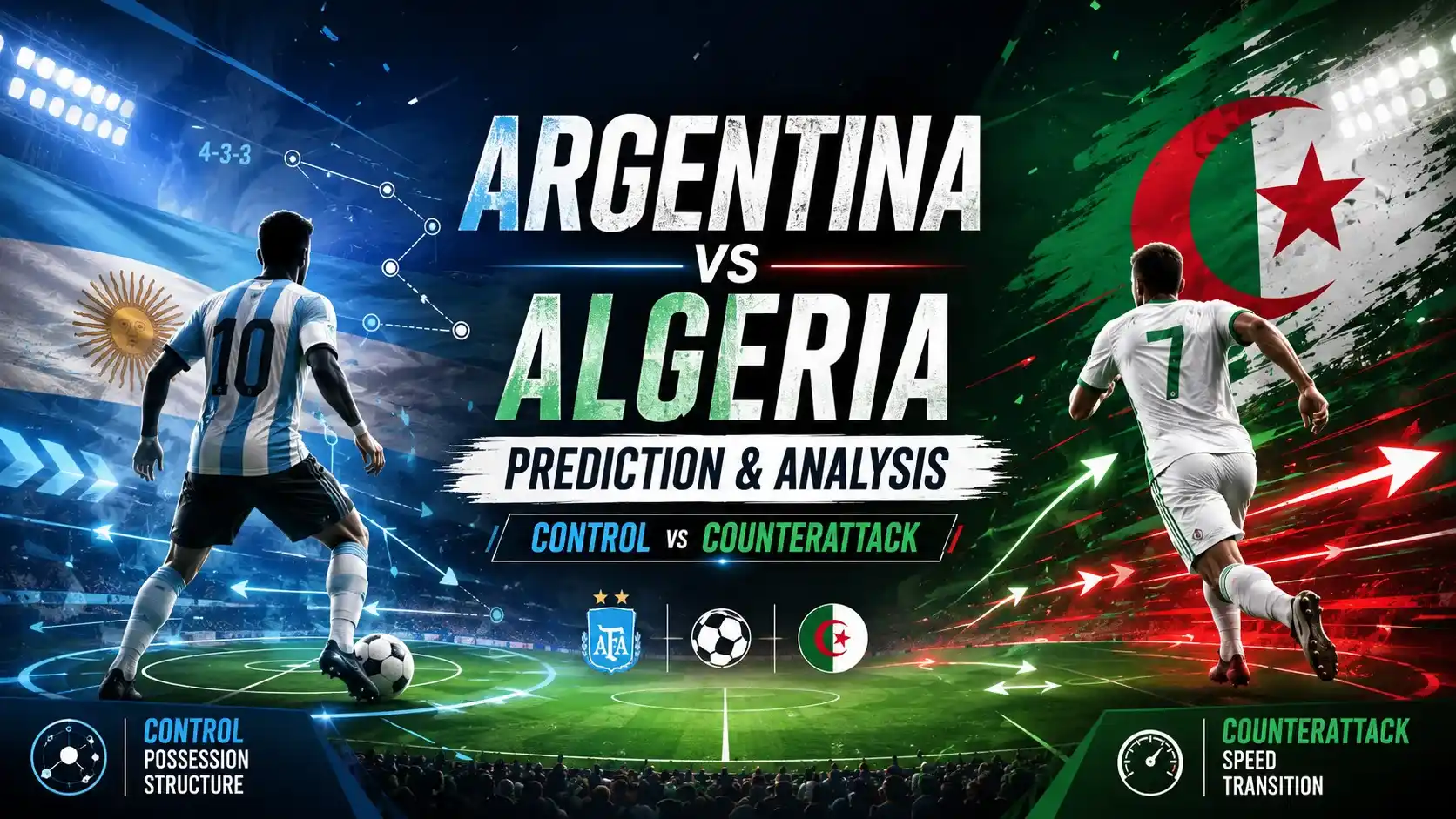
Match Context and Kenya Viewing Details
Argentina versus Algeria kicks off at 04:00 East Africa Time on 17 June 2026 at Kansas City Stadium, requiring Kenya-based fans to prepare for an early morning viewing experience for this Group J curtain-raiser. The late-night local kickoff in Kansas City creates the typical World Cup scheduling challenge for East African audiences who must balance early alarms with workday commitments.
Kenya supporters can track live updates through Pulser’s dedicated match page covering this fixture, while the broader tournament calendar remains accessible via the full World Cup 2026 schedule in Kenya Time to plan subsequent viewing sessions. Group J represents a critical pathway for both teams, with Argentina seeking to establish immediate dominance and Algeria aiming to announce their return after a prolonged absence.
Argentina enter this encounter carrying the weight of defending champions while pursuing history, with Lionel Messi potentially earning his 200th international cap if he takes the field. The Argentine captain recently returned from a muscle issue during warm-up preparations, making his availability for the full ninety minutes uncertain rather than guaranteed, while coach Lionel Scaloni faces a late defensive adjustment after Leonardo Balerdi withdrew through calf injury and Marcos Senesi received an emergency call-up. Algeria return to the global stage following a twelve-year absence from World Cup finals, bringing experienced campaigners including Aissa Mandi and Ramy Bensebaini alongside captain Riyad Mahrez, with the squad bolstered by emerging talents like Rayan Ait-Nouri and the pace of Mohamed Amoura.
Tactical Analysis: Scaloni’s Possession Control vs Algeria’s Transition Threat
Argentina will dominate possession and territory through their midfield trio of Rodrigo De Paul, Alexis Mac Allister and Enzo Fernandez, forcing Algeria into a reactive counterattacking posture that relies on transitional speed rather than sustained buildup. Messi operates primarily between Algeria’s defensive and midfield lines, dropping into pockets of space to receive facing forward while scanning for diagonal runs from Julian Alvarez or Lautaro Martinez stretching the channels.
Algeria’s central defensive pairing must decide whether to follow Messi into these zones, thereby opening corridors for Argentina’s midfield runners, or maintain position and allow the Argentine captain time to execute his passing range. This defensive dilemma defines the tactical battle, as compactness without pressure on Messi invites precise through-balls, while aggressive marking creates the midfield vacuums that Mac Allister and Fernandez exploit with late-arriving shots and cutbacks.
Algeria’s attacking threat materializes through rapid vertical transitions spearheaded by Mahrez’s creative distribution, Amoura’s speed in behind defensive lines, and Ait-Nouri’s progressive carrying from the left flank. The North Africans must execute their first pass after winning possession with precision, bypassing Argentina’s aggressive counterpress that sees De Paul and Fernandez immediately closing space to force turnovers high up the pitch.
The central tactical dilemma confronts Algeria with an impossible choice: committing numbers to mark Messi creates space for Mac Allister’s late arrivals and Fernandez’s driving runs, while maintaining compact shape risks allowing Messi uncontested possession between the lines. Scaloni faces his own strategic decision regarding whether to maintain immediate high pressing after turnovers or adopt cautious energy management in this opening match, knowing that aggressive positioning leaves defensive transitions exposed to Amoura’s acceleration.
Prediction and Editorial Verdict
The editorial prediction favors Argentina to win 2-0, grounded in their superior ability to control midfield territory and quickly recover possession to limit Algeria’s sustained attacking phases. Algeria’s most viable path to success lies in creating chaotic, transitional moments rather than allowing Argentina to establish their preferred slow, controlled rhythm, leveraging Mahrez’s set-piece delivery and the pace of Amoura and Anis Hadj Moussa to exploit space left by Argentina’s attacking fullbacks.
Sustained pressure remains unlikely against Argentina’s counterpressing structure, meaning Algeria must capitalize on the rare instances when they bypass the initial press to attack before the defensive block reorganizes. Historical patterns suggest that favorites who dominate possession early in tournaments sometimes struggle with breakthrough efficiency, yet Argentina’s collective understanding and varied attacking angles provide multiple solutions against deep defensive blocks.
The structural debate surrounding this Argentina generation centers on whether Scaloni has constructed a system capable of controlling matches through collective midfield strength independently of Messi’s individual brilliance, or if the milestone celebration merely reflects continued tactical dependency on their captain’s creativity. Group J standings and fixtures will reveal immediately whether Argentina possess the squad depth to navigate tournament pressure should Messi’s availability remain limited, while Algeria seek to prove that tactical discipline and pace can disrupt the established hierarchy of international football.