
Kenya Time: When to Watch World Cup 2026 Matches
East Africa Time provides consistent scheduling for Kenyan viewers throughout the tournament. Kenya operates on East Africa Time (EAT), which remains fixed at UTC+3 throughout the entire year without daylight saving time adjustments. This stability eliminates clock-change confusion and allows football fans to plan their viewing schedules with confidence from the opening match to the final. Unlike European or North American viewers who face summer time changes, Kenyan supporters experience no temporal disruptions during the June-July competition period.
Kickoff times will vary significantly depending on which host city stages each fixture. The 2026 tournament spans three nations with multiple time zones, meaning matches will convert to afternoon, evening, and late-night slots in Kenya. Specific kickoff times require individual checking rather than assuming a regular daily pattern, as West Coast venues in the United States will produce different Kenya Time conversions than East Coast or Mexican host cities. Early afternoon kickoffs in Los Angeles translate to late evening viewing in Nairobi, while evening matches on the East Coast may air past midnight local time.
The expanded tournament schedule runs for 39 days and features 104 total matches, an increase from previous editions. Group stage days will offer multiple matches daily, requiring strategic planning around work commitments and weekend availability. Kenyan fans should bookmark the complete 2026 FIFA World Cup schedule in Kenya Time to track specific fixtures without manual timezone conversion. The compressed schedule during knockout rounds demands particular attention to late-night fixtures that may extend into early morning hours.
Understanding the Expanded 48-Team Tournament Structure
The 2026 format introduces 12 groups of four teams each, fundamentally changing the tournament structure. FIFA expanded the competition to 48 teams, creating 12 groups instead of the previous eight-group format used since 1998. This expansion adds 40 additional matches to the tournament and extends the competition length, providing Kenyan viewers with more consistent daily football content throughout the group stage. The mathematical increase from 32 to 48 participating nations creates a more geographically diverse competition representing additional confederations.
Knockout phase qualification now includes a Round of 32 rather than starting directly at the Round of 16. The top two teams from each of the 12 groups automatically advance, joined by the eight best third-placed teams based on points, goal difference, and other tie-breakers. This structure creates additional elimination fixtures and means teams finishing third still possess realistic advancement opportunities, increasing stakes for every group match. The four best third-placed teams from the 1994 and 1986 tournaments previously enjoyed similar benefits, but the 2026 edition institutionalizes this pathway for nearly half the third-place finishers.
Tournament organizers designed the schedule to minimize match overlaps during the group stage. The increased number of daily fixtures across different kickoff windows ensures Kenyan fans can follow multiple teams without excessive scheduling conflicts. The additional knockout round extends the elimination phase by several days, creating a more gradual tournament progression that maintains viewer engagement across nearly six weeks.
How to Track Matches Using Pulser’s World Cup Hub
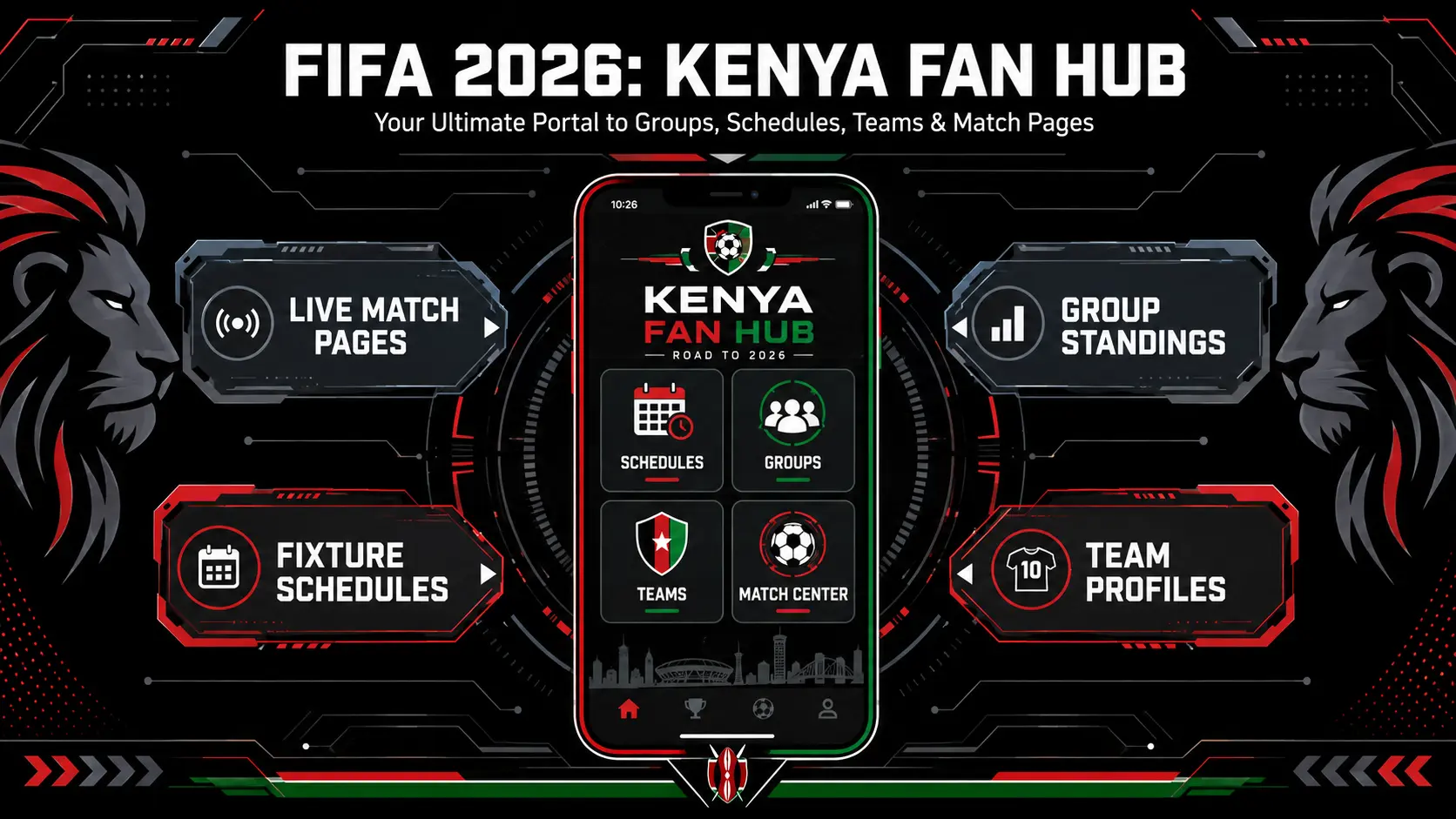
Pulser’s World Cup hub provides Kenyan fans with timezone-optimized fixtures and dedicated match tracking tools. The FIFA World Cup hub serves as the central navigation point for all tournament content, offering immediate access to schedules, group standings, and team-specific information formatted for East African viewers. Mobile-responsive design ensures the interface functions smoothly on various devices, from desktop computers to budget smartphones commonly used across Kenya.
Individual group pages follow a consistent URL structure allowing direct access to specific sections. Fans can navigate directly to group pages using the format https://pulser.ke/world-cup-2026-group-{group-letter}/ to follow particular nations through the group stage. These dedicated pages display fixtures, results, and standings updates as the tournament progresses, eliminating the need to scroll through unrelated content. Each group maintains separate pages for fixture lists and standings tables, ensuring quick loading times even on slower mobile networks.
Single match pages enable personalized viewing calendars through direct URL access. Each fixture maintains a dedicated page using the format https://pulser.ke/fifa2026-{home-slug}-{away-slug}-{yyyymmdd}/, allowing supporters to bookmark specific matches they plan to watch. Mobile-optimized design ensures these pages load efficiently on smartphones, making it simple to check kickoff times while commuting or planning evening viewing sessions with friends. Regular updates to these pages ensure kickoff times remain accurate as the tournament approaches, reflecting any schedule adjustments made by FIFA organizers.
FAQ
What time will World Cup 2026 matches start in Kenya?
Match kickoffs will vary throughout the day in East Africa Time (EAT, UTC+3) depending on which host nation and city is staging the game. Pulser provides the complete schedule converted to Kenya Time to help you plan viewing for specific fixtures.
How many teams qualify from each group in the 2026 World Cup?
The top two teams from each of the 12 groups automatically advance to the Round of 32, joined by the eight best third-placed teams. Specific qualification scenarios and tie-breaker details will be updated on Pulser as the tournament progresses.
Where can I find the daily match schedule in Kenya Time?
Pulser maintains a dedicated 2026 FIFA World Cup schedule in Kenya Time showing all 104 matches in East Africa Time (EAT). Fans can check today’s matches, upcoming fixtures and the complete tournament schedule in one place. The page is optimized for mobile reading and updated with fixture details throughout the tournament.