
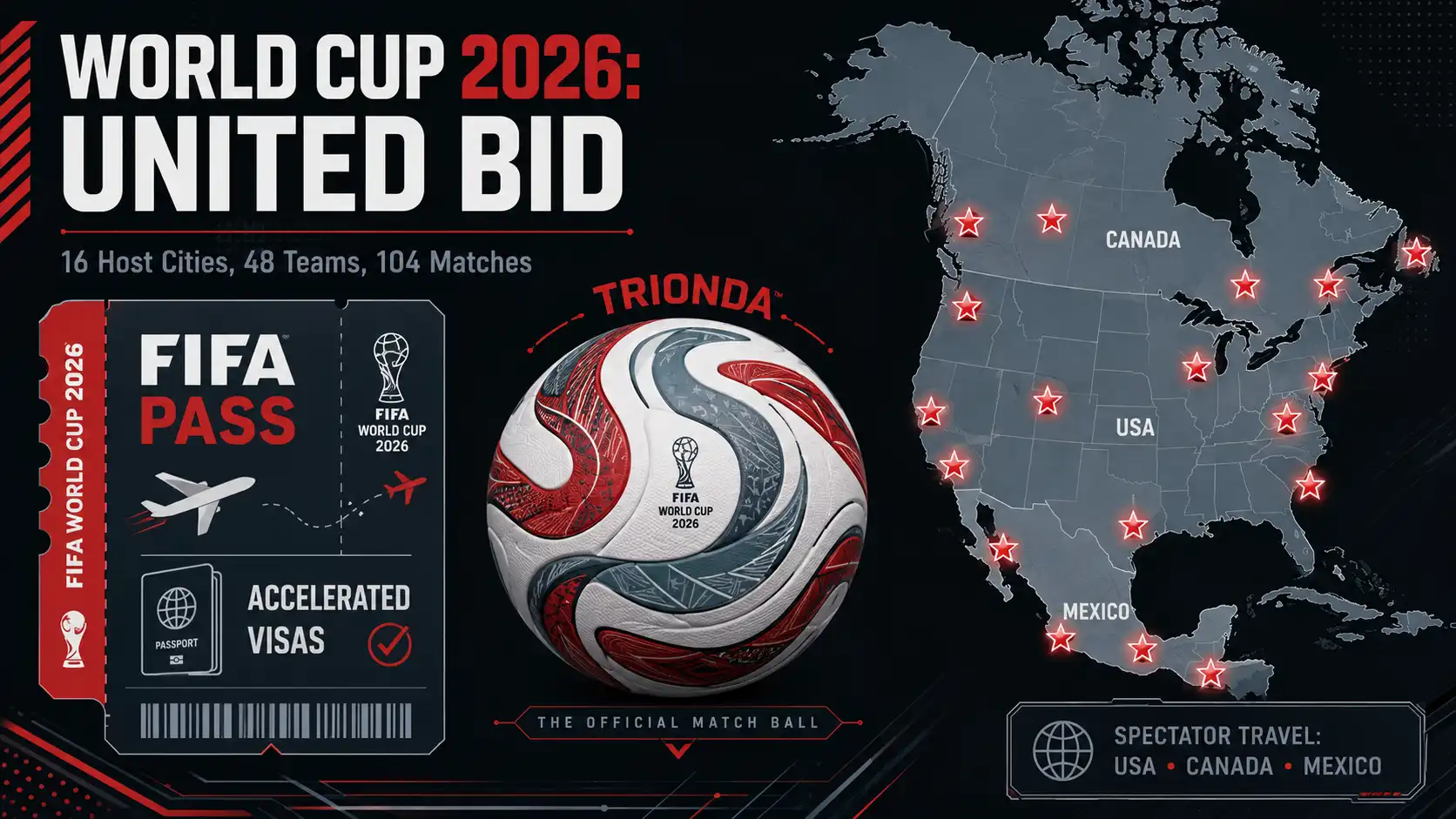
The 2026 FIFA World Cup stands as a groundbreaking celebration of global football, setting a monumental precedent as the tournament prepares to kick off next week on June 11, 2026. For international spectators, particularly passionate football enthusiasts planning their journeys from Kenya, navigating this unprecedented cross-continental expansion can present complex scheduling and logistical challenges. This comprehensive guide offers an in-depth breakdown of the multi-nation 2026 world cup host framework across the United States, Canada, and Mexico, mapping out all 16 host cities and their advanced stadium infrastructures. We explore critical travel logistics, host country visa policies including the priority FIFA PASS system, and the structural implications of the newly expanded 48-team format. From coordinating flights departing Nairobi to managing dynamic ticket budgets, this strategic overview provides fans with the essential insights needed to navigate the expansive North American tournament zone seamlessly during this historic summer of sport.
The 2026 FIFA World Cup prepares for kickoff as three North American nations unite
The 2026 FIFA World Cup stands as the largest sporting milestone of the decade, preparing to kick off next week on June 11, 2026. This prestigious tournament is co-hosted by three sovereign nations under a unified organization. This 2026 world cup host structure represents a groundbreaking paradigm shift in sports tourism, bringing together diverse cultures across the entire continent.
Why the historic United Bid secured the hosting rights for three North American nations
The United Bid (USA, Mexico, Canada) secured the official hosting rights for the tournament after a highly competitive selection process. This collaborative bid defeated the Morocco Bid during the 68th FIFA Congress by presenting a superior infrastructure and stadium logistics blueprint. It proved that cross-border cooperation could offer an unparalleled framework for a multi-nation sporting event.
What is the primary role of the FIFA Council in guiding this tournament
The FIFA Council acts as the primary decision-making body responsible for defining the structural rules and regulatory frameworks of international football. This powerful committee approved the landmark expansion of the tournament and finalized the host city selections after rigorous technical evaluations. Its strategic guidance ensures that the competition maintains international standards while fostering global football development.
Where are the 16 Host Cities located across the expansive North American continent
The 16 Host Cities selected for the 2026 FIFA World Cup are strategically divided into three distinct geographical zones to ease travel logistics across each 2026 world cup host region. These metropolitan areas stretch from the cool Pacific Northwest to the warm sub-tropical coastlines of the Gulf of Mexico. Organizing the cities into Western, Central, and Eastern regions helps teams and international spectators manage the immense scale of the host continent.
How iconic venues like Estadio Azteca and MetLife Stadium prepared for historic matches
Estadio Azteca in Mexico City represents the historical crown jewel of North American football, becoming the first stadium to host matches in three separate World Cup editions. This legendary venue is complemented by modern architectural giants such as MetLife Stadium in East Rutherford, New Jersey, which has been selected to host the grand finale on July 19, 2026. These primary stadiums have upgraded their natural grass surfaces and communications infrastructure to meet the strict guidelines set by international organizers.
Why infrastructure investment drives a lasting local economic impact across all host cities
Local Economic Impact / Infrastructure Investment represents the primary long-term benefit for the municipal hosts welcoming hundreds of thousands of international visitors. These targeted urban upgrades improve transit networks, airport capacity, and digital connectivity, creating thousands of temporary and permanent jobs. They guarantee that the financial expenditures associated with stadium retrofits yield sustainable developmental rewards long after the final whistle.
| Geographical Region | Host Cities | Key Venues |
|---|---|---|
| Western Region | Vancouver, Seattle, San Francisco Bay Area, Los Angeles, Guadalajara | BC Place, Lumen Field, Levi’s Stadium, SoFi Stadium, Estadio Akron |
| Central Region | Kansas City, Dallas, Houston, Atlanta, Monterrey, Mexico City | Arrowhead Stadium, AT&T Stadium, NRG Stadium, Mercedes-Benz Stadium, Estadio BBVA, Estadio Azteca |
| Eastern Region | Toronto, Boston, New York New Jersey, Philadelphia, Miami | BMO Field, Gillette Stadium, MetLife Stadium, Lincoln Financial Field, Hard Rock Stadium |
How the expanded format of 48 Teams and 104 matches changes the tournament dynamics
The newly introduced tournament format for the 2026 FIFA World Cup presents a massive schedule consisting of 48 Teams / 104 Matches. This expanded structure changes the competitive dynamics for every world cup 2026 host city by extending the tournament duration to 39 days. It creates a dynamic environment where smaller nations have an unprecedented opportunity to compete on the world stage.
Why the official match ball Trionda symbolizes cultural unity across three diverse nations
Trionda, the official match ball created by Adidas for this tournament, serves as a powerful symbol of continental cooperation. This high-performance ball integrates advanced aerodynamic technology with design motifs representing the cultural heritage of the United States, Canada, and Mexico. It embodies the shared passion for football that unites these three distinct nations under a single sporting banner.
How the tournament implements strategic carbon neutrality goals to achieve green sustainability
Carbon Neutrality / Sustainability Goals dictate how modern mega-events must be managed to mitigate their environmental footprint. This green initiative focuses on minimizing flights through regionalized group stages, utilizing renewable energy at all venues, and implementing comprehensive waste recycling programs. It serves as an essential blueprint for future sporting events aiming to balance massive global attendance with rigorous ecological preservation.
- Regionalized Match Scheduling: Group matches are clustered geographically to minimize air travel distance for teams and fans.
- Green Stadium Operations: All 16 venues utilize localized smart grids and renewable energy resources to power operations.
- Comprehensive Circular Economy: Strict zero-waste-to-landfill policies and comprehensive recycling programs are active at all official Fan Festivals.
How can international spectators successfully navigate cross-border travel logistics and visa policies
Navigating cross-border travel logistics / visa policy options during the 2026 FIFA World Cup requires early administrative preparation from international fans. Because each 2026 world cup host nation maintains distinct border controls, spectators must coordinate their documentation carefully. Supporters must secure their necessary visas well in advance, as ticket ownership does not grant automatic entry into any of the host nations.
Why the innovative FIFA PASS system accelerates US tourist visa scheduling for ticket holders
FIFA PASS is a specialized priority appointment scheduling system designed in collaboration with the United States Department of State to assist international ticket holders. This voluntary program grants verified match ticket owners priority access to B-1/B-2 tourist visa interview slots at US embassies worldwide. It significantly reduces consular waiting times, which is a vital benefit for Kenyan fans applying from the embassy in Nairobi.
How to manage flights from Nairobi to North America and plan dynamic ticket budgets
Flights from Nairobi to major North American hubs must be booked early to secure reasonable rates during the high-demand summer travel season. International supporters should expect multi-leg journeys connecting through European or Middle Eastern airports before arriving in East Coast cities like New York or Boston. Additionally, spectators should plan their budgets around the new dynamic ticketing system, where group-stage entry starts at $60, but high-end packages, including premium Roadtrips hospitality and final match tickets at MetLife Stadium, can reach several thousand dollars.
FAQ
Who is hosting the World Cup 2026?
The 2026 FIFA World Cup is jointly hosted by three North American countries: the United States, Canada, and Mexico. These nations won the rights under a collaborative hosting framework known as the United Bid, representing a unique 2026 world cup host alliance.
What city is the World Cup final in 2026?
The final of the 2026 FIFA World Cup will be held at MetLife Stadium in East Rutherford, New Jersey, representing the New York metropolitan area. This world-class venue will host the championship match on July 19, 2026.
Who is hosting the World Cup 2030?
The FIFA Council has approved a unique multi-nation plan for the 2030 World Cup, which will be primarily co-hosted by Spain, Portugal, and Morocco. Additionally, centenary matches will be played in Uruguay, Argentina, and Paraguay to celebrate the tournament’s 100th anniversary.
How many venues will be used in 2026?
A total of 16 Host Cities across North America will utilize existing, upgraded stadiums. These selected arenas feature state-of-the-art facilities and meet rigorous international playing standards.
References
- FIFA WORLD CUP 2026™ TRAVEL, VISAS, AND FIFA PASS (FIFA Official)
- Host Countries and Cities (FIFA Official)
- View the FIFA World Cup 2026 match schedule (FIFA Official)