
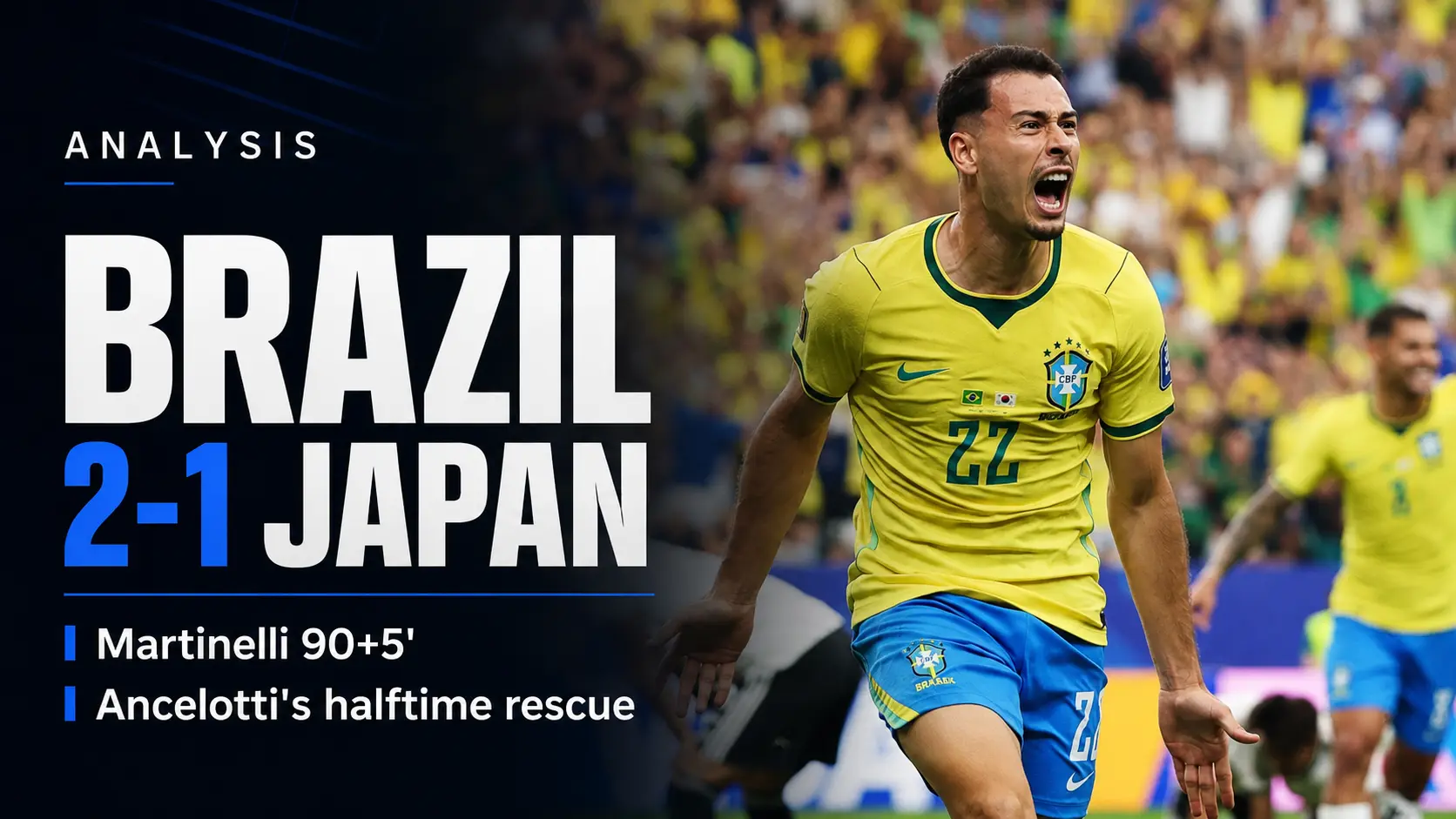
Match Result and Elimination Drama
The final 2-1 scoreline confirmed Brazil’s passage to the Round of 16, yet the result remained in doubt until Gabriel Martinelli’s 95th-minute finish broke Japanese resistance at the death.
Kaishu Sano’s 29th-minute strike capped a period of sustained transitional pressure from Japan, who punished Brazil’s midfield turnovers to seize the lead against the run of pre-match expectation. Sano’s finish rewarded a compact defensive structure that had frustrated Brazil’s attempts to penetrate centrally, echoing the tactical discipline Japan displayed in their October 2025 friendly victory over the same opponent.
Gabriel Martinelli’s winner arrived five minutes into second-half stoppage time, assisted by Bruno Guimarães’s incisive pass into space created by Japan’s physically depleted backline. The goal denied Japan the relief of a penalty shootout and capped a grueling knockout tie where elimination pressure mounted with every passing minute after Casemiro’s equalizer.
Brazil’s Group C pedigree—seven points and a plus-6 goal difference from the group stage—provided the foundation for this resilience, while Japan’s Group F runner-up status (five points, plus-4 goal difference) ultimately could not prevent tournament elimination despite their heroic defensive display. Fans seeking minute-by-minute confirmation of the goal times and lineup changes should consult the Brazil vs Japan match details and timeline for verified match data.
Tactical Battle: Moriyasu’s Discipline vs Ancelotti’s Adaptation
Hajime Moriyasu’s compact, physically demanding first-half blueprint successfully restricted Brazil’s central combinations, while Carlo Ancelotti’s halftime rescue plan shifted the Seleção toward patient wide buildup and direct penalty-area assault.
Moriyasu deployed a low-block system that congested the half-spaces where Brazil prefers to operate, forcing turnovers and creating the transitional moment that led to Sano’s opener. The Japanese midfield’s relentless pressing and physical duels disrupted Brazil’s rhythm, reflecting lessons learned from their 3-2 friendly win in October 2025 and preventing the South Americans from establishing any first-half dominance.
Carlo Ancelotti responded during the interval by instructing his full-backs to push higher and his wingers to hold width, abandoning the congested central penetration that had failed in the first 45 minutes. The adjustment produced a higher volume of crosses and set-piece opportunities, with Casemiro’s equalizer arriving from a well-worked aerial move that exploited Japan’s decreasing ability to contest headers under sustained pressure.
Substitute Gabriel Martinelli’s introduction provided the fresh legs and direct running necessary to exploit gaps in Japan’s exhausted defensive lines during the final quarter-hour. Japan’s inability to maintain their first-half intensity in the humid conditions ultimately created the pocket of space that Guimarães and Martinelli combined to punish, highlighting how Brazil’s superior squad depth and tactical flexibility proved decisive in knockout football. The World Cup 2026 Round of 32 bracket now reflects this tactical victory’s implications for the tournament structure.
Knockout Path Forward and Structural Questions
Brazil’s advancement to the Round of 16 sets up a meeting with the winner of Ivory Coast versus Norway, though the narrow escape against Japan raises legitimate questions about structural vulnerabilities that stronger opponents might replicate.
Brazil’s next opponent will emerge from the Ivory Coast versus Norway clash, with both potential rivals possessing the physical midfield profiles and transitional speed to trouble the Seleção’s buildup play. East African fans planning to watch this quarter-final path fixture should consult the full World Cup schedule in Kenya Time to confirm kickoff details for the weekend fixture.
Japan’s success in disrupting Brazil’s midfield rhythm and creating high-quality first-half chances exposes a potential blueprint for future opponents, particularly those with superior athletic resources than the Samurai Blue. Ivory Coast’s physicality or Norway’s organized pressing could exploit the same spaces that Moriyasu’s side identified, suggesting that Ancelotti must address these structural issues before facing more formidable knockout opposition.
East African viewers tracking the championship campaign can follow Brazil’s progress and the complete knockout landscape through Pulser’s dedicated tournament resources. The qualified and eliminated teams tracker provides real-time updates on who remains in contention, while the knockout stage guide maps the remaining path to the final for all surviving nations including the five-time champions.