
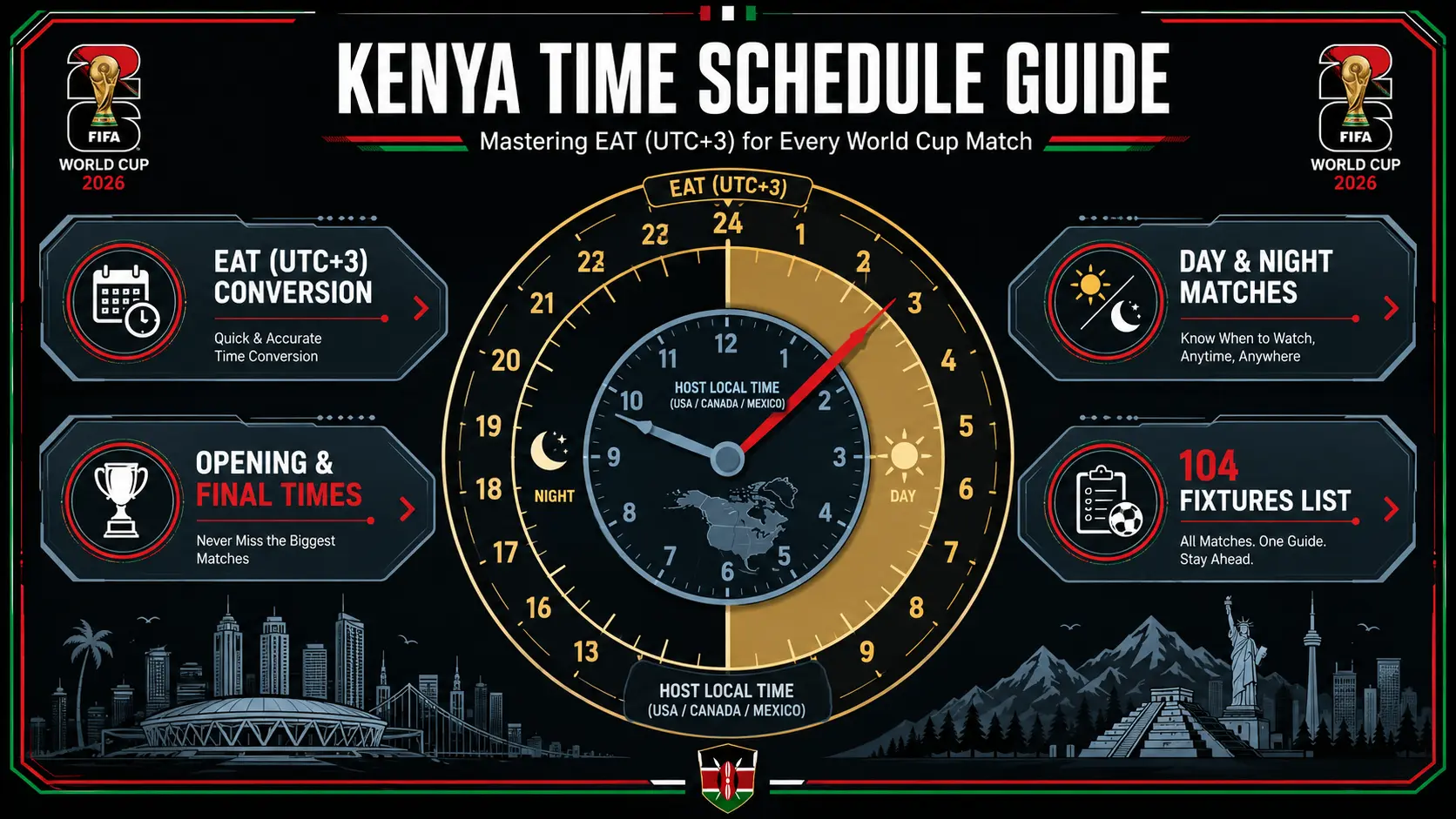
The Time Zone Gap Between Nairobi and North America
The time difference between Nairobi and North American host cities ranges from seven to ten hours, forcing Kenyan viewers to watch many fixtures during the early morning hours.
Kenya operates on East Africa Time (EAT, UTC+3) throughout the year without observing daylight saving time. North American host cities span four different time zones: Pacific Time (UTC-7), Mountain Time (UTC-6), Central Time (UTC-5), and Eastern Time (UTC-4) during the summer tournament months. This longitudinal distance creates a consistent gap that places Kenya seven to ten hours ahead of kickoff locations, meaning when the sun sets over stadiums in Los Angeles, Nairobi is already approaching midday the following day.
FIFA prioritizes evening kickoffs between 6pm and 9pm local time in host cities to maximize stadium attendance and capture peak North American television audiences. These scheduling decisions mathematically convert to 3am-6am in Nairobi when accounting for the time zone differential. West Coast venues such as Los Angeles and Vancouver will host matches that air latest for Kenyan viewers, typically around 4am-6am EAT, while East Coast cities like New York and Toronto offer relatively earlier viewing times that still fall between midnight and 4am EAT.
Host cities spread across three countries mean no single kickoff time can accommodate all global audiences simultaneously. Matches played in Mexico City or Central Time zones create an eight-hour gap, translating 8pm local kickoffs to 4am in Nairobi. Kenyan football fans should consult the full World Cup 2026 schedule converted to Kenya Time to identify which specific venues produce the most challenging viewing hours.
How the 48-Team Format Affects Viewing Schedules
The expanded 48-team tournament featuring 104 matches requires FIFA to schedule multiple daily fixtures across three countries, creating staggered kickoff times that inevitably place some matches in the overnight hours for East African audiences.
The 2026 World Cup introduces a new format with 48 national teams competing in 104 total matches, significantly increasing the fixture load compared to previous tournaments. Organizers must spread these matches across afternoon and evening slots to accommodate stadium availability and broadcast windows in Canada, the United States, and Mexico. Kenyan viewers will encounter both manageable evening kickoffs between 9pm and 11pm EAT and challenging early morning slots between 2am and 5am EAT depending on the specific fixture.
Twelve groups playing simultaneous fixtures during the group stage force FIFA to utilize multiple kickoff windows daily. Matches scheduled for North American afternoon periods (approximately 1pm-4pm local time) will air during socially acceptable evening hours in Kenya (9pm-midnight). However, the tournament structure requires evening fixtures in the Americas to satisfy domestic broadcast contracts, pushing those same matches into the predawn hours for viewers in Nairobi and across East Africa.
A new Round of 32 knockout phase adds additional midweek fixtures that must balance prime-time demands in the Americas with global broadcast needs. High-stakes elimination matches involving African teams or tournament favorites risk falling into the 3am-6am window for Kenyan audiences. Fans can track specific fixtures using individual match pages on Pulser to confirm exact East Africa Time kickoffs before setting alarms.
Planning Your 2026 World Cup Viewing in East Africa
Strategic planning using reliable schedule resources allows Kenyan fans to prioritize fixtures that fit their daily routines while preparing for overnight matches featuring must-see teams.
The official Pulser schedule page provides comprehensive conversion of all kickoff times to East Africa Time, enabling supporters to identify which specific matches fall during socially acceptable evening hours versus overnight slots. Readers should rely on this authoritative resource rather than unofficial fixture lists that may contain errors or outdated information. The Pulser FIFA World Cup hub and group and teams schedule page offer additional context on group compositions and venue locations to help predict which matches might air at convenient times.
Kenya maintains consistent East Africa Time (UTC+3) throughout the year without observing daylight saving time, while the United States and Canada adjust their clocks seasonally. During the June-July 2026 tournament period, North American host cities will operate on daylight saving time, meaning the time difference remains constant at seven to ten hours throughout the competition. Verification of individual match pages remains essential for any last-minute scheduling adjustments announced by FIFA.
Supporters should use Pulser’s single-match pages to set calendar reminders for specific fixtures involving African teams or favorite nations, ensuring accurate EAT kickoff times are confirmed before planning viewing parties or adjusting sleep schedules. Morning commitments and work obligations make the 2am-6am kickoff window particularly challenging for Kenyan fans, making advance preparation crucial for catching live action without compromising daily responsibilities. Weekend fixtures may offer more flexibility for overnight viewing compared to weekday matches that immediately precede working hours.
FAQ
What is the exact time difference between Kenya and the 2026 World Cup host cities?
Kenya uses East Africa Time (UTC+3). The 2026 host cities range from UTC-4 (Eastern US/Canada) to UTC-7 (Pacific US/Canada), creating a time gap of 7 to 10 hours depending on the specific venue.
Will all 2026 World Cup matches air late at night in Kenya?
No. Afternoon kickoffs in North America (approximately 1pm-4pm local time) will air during evening hours in Kenya (9pm-midnight), while evening fixtures will air in the early morning hours (2am-6am EAT).
Does daylight saving time affect match times for Kenyan viewers?
Kenya does not observe daylight saving time, but the United States and Canada do. During the June-July 2026 tournament, North American host cities will be on daylight saving time, maintaining a consistent time difference with Kenya throughout the competition.