
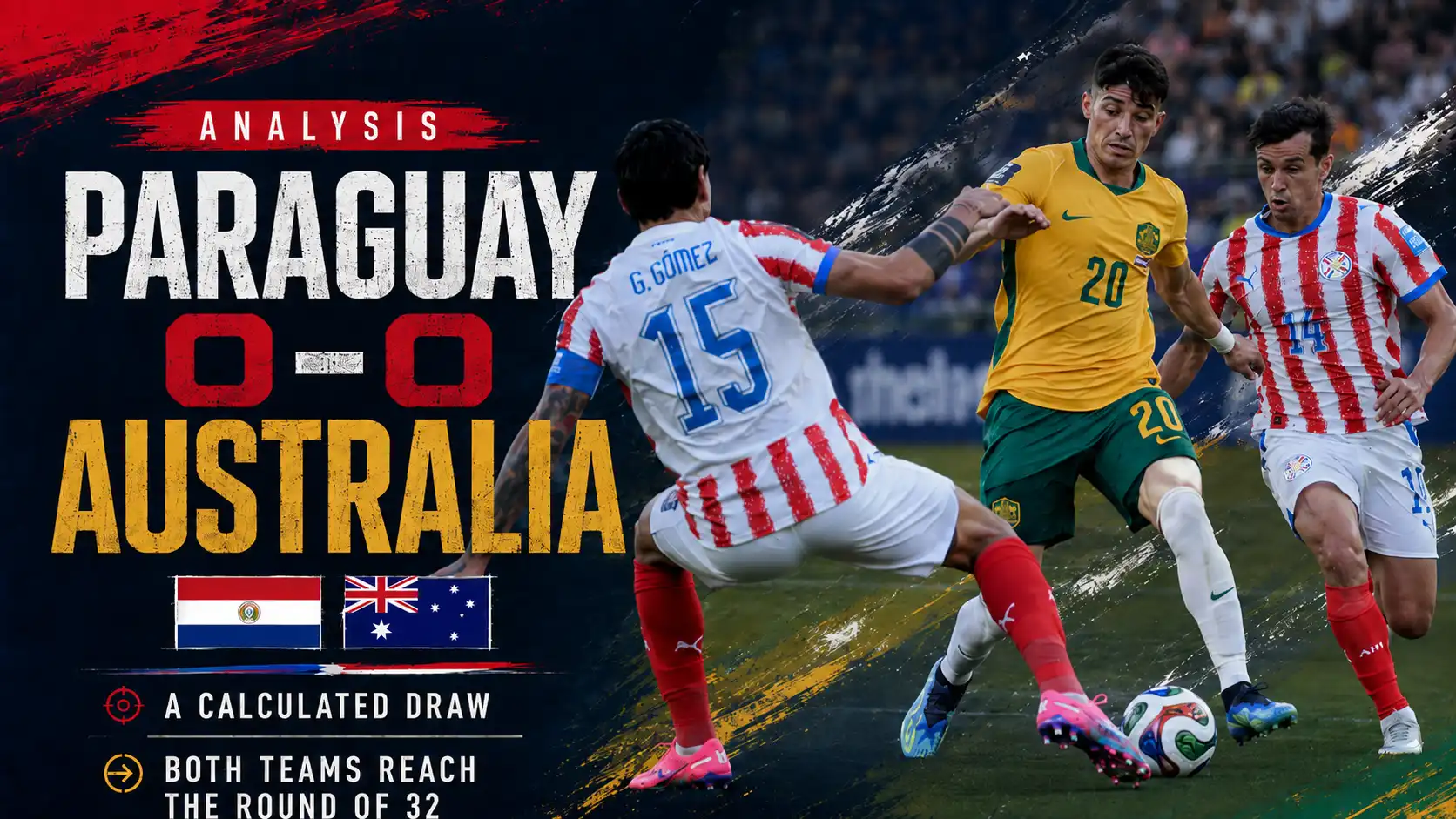
The Qualification Mathematics: How a 0-0 Draw Sent Both Teams Through
The stalemate secured Australia’s second-place finish and Paraguay’s position among the best third-placed teams under the expanded 48-team tournament structure.
The 2026 FIFA World Cup format allows the four best third-placed teams from the twelve groups to advance alongside the top two finishers. Paraguay’s four-point total, accumulated despite a negative-two goal difference, proved sufficient for advancement—a mathematical impossibility under the previous 32-team structure where only the top two progressed. Fans examining the Group D final standings and results can see how Paraguay edged ahead of other third-placed contenders through this four-point haul.
Australia’s four-point tally and zero goal difference confirmed their runner-up status behind the United States. The Socceroos opened their campaign with a 2-0 victory over Türkiye before suffering a 2-0 defeat to the United States, leaving them vulnerable to elimination had Paraguay secured a decisive win. Mathematical certainty crystallized early in the second half when both teams recognized that the draw guaranteed Australia’s second-place position and Paraguay’s status among the best losers, effectively neutralizing competitive incentives for risk-taking.
Paraguay’s tournament trajectory demonstrated remarkable recovery from a 4-1 opening defeat to the United States. Gustavo Alfaro’s squad followed that setback with a 1-0 victory over Türkiye, setting up this decisive final fixture where defensive organization took precedence over attacking ambition. The detailed match report and timeline illustrates how both teams adjusted their tactics once qualification became the shared priority.
Tactical Analysis: Popovic’s Pragmatism Against Alfaro’s Discipline
Tony Popovic implemented six changes to prioritize defensive stability over attacking ambition, while Gustavo Alfaro’s Paraguay displayed improved second-half possession without suspended playmaker Miguel Almirón.
Popovic’s rotation strategy prioritized squad freshness while maintaining the compact defensive structure necessary to protect second place. The Australian manager risked criticism for suppressing offensive ambition, yet the approach ensured no catastrophic defensive error compromised their position. Defensive discipline dominated Australia’s thinking, with wide attacks that characterized their opening twenty minutes gradually abandoned as the qualification picture clarified.
Paraguay’s midfield controlled territory after halftime without translating dominance into decisive scoring opportunities. Alfaro’s men missed the creative influence of suspended Newcastle United attacker Miguel Almirón, forcing a more collective approach that probed Australia’s organized block without finding penetration. The Albirroja improved their passing rhythm and territorial presence, yet the final ball consistently failed to materialize against Australia’s deep defensive lines.
Psychological factors shaped the match’s rhythm as both teams settled into a mutually beneficial equilibrium. Professional calculation replaced competitive aggression, with neither side willing to commit numbers forward and risk the defensive solidarity that secured their mutual advancement. Observers debating the merits of this approach question whether the absence of goalmouth action reflected intelligent tournament management appropriate for the group stage, or exposed fundamental attacking limitations that stronger knockout opponents will exploit.
Round of 32 Outlook: Tournament Intelligence or Tactical Warning?
The goalless result exposed a philosophical divide between professional tournament management and attacking ambition, raising questions about whether either squad possesses the offensive weapons necessary for single-elimination success.
Australia’s defensive discipline suggests a team comfortable absorbing pressure against superior opposition, yet their diminished attacking output since the opening Türkiye victory indicates potential creative exhaustion. The Socceroos’ willingness to accept lower risk and reduced possession demonstrated tactical maturity, though knockout football demands moments of individual brilliance that Popovic’s pragmatic system may suppress. Supporters seeking Round of 32 schedule information in Kenya Time will watch to see whether Australia can rediscover offensive spark against group winners in the next phase.
Paraguay’s recovery from their opening debacle demonstrated mental resilience, yet their failure to break down a rotated Australian defense reveals concerning limitations. The Albirroja’s inability to convert second-half possession against defensive opposition suggests struggles against more clinical knockout adversaries who will not offer the spatial generosity of a mutually beneficial draw. Four points and a negative goal difference historically signal vulnerability in tournament football, even within this expanded format.
Both teams must now transition from protection mode to elimination mentality. The FIFA 2026 hub provides comprehensive coverage as these sides prepare for single-elimination fixtures where defensive solidity alone rarely suffices. Whether this calculated draw represents smart tournament intelligence or a tactical warning sign will be determined in the upcoming knockout matches.
FAQ
How did Paraguay qualify for the Round of 32 with a negative goal difference?
The expanded 48-team World Cup format allows the four best third-placed teams to advance. Paraguay’s four points from Group D—despite a negative-two goal difference—proved sufficient to rank among these advancing third-placed teams, a scenario impossible under the previous 32-team tournament structure.
Why did Australia make six changes against Paraguay?
Tony Popovic rotated six players to manage squad fatigue while maintaining a compact defensive structure designed to protect Australia’s second-place position. The changes prioritized defensive stability and second-place security over attacking ambition, reflecting a calculated risk-management approach for the final group fixture.
When will Australia and Paraguay play their Round of 32 matches in Kenya time?
Fans should check the 2026 FIFA World Cup schedule in Kenya Time for confirmed East African Time (EAT) kick-off times for the knockout matches. The schedule provides updated fixtures for both teams as they advance to the single-elimination phase.