
Bosnia 3-1 Qatar: Goal Breakdown and Group B Final Standings
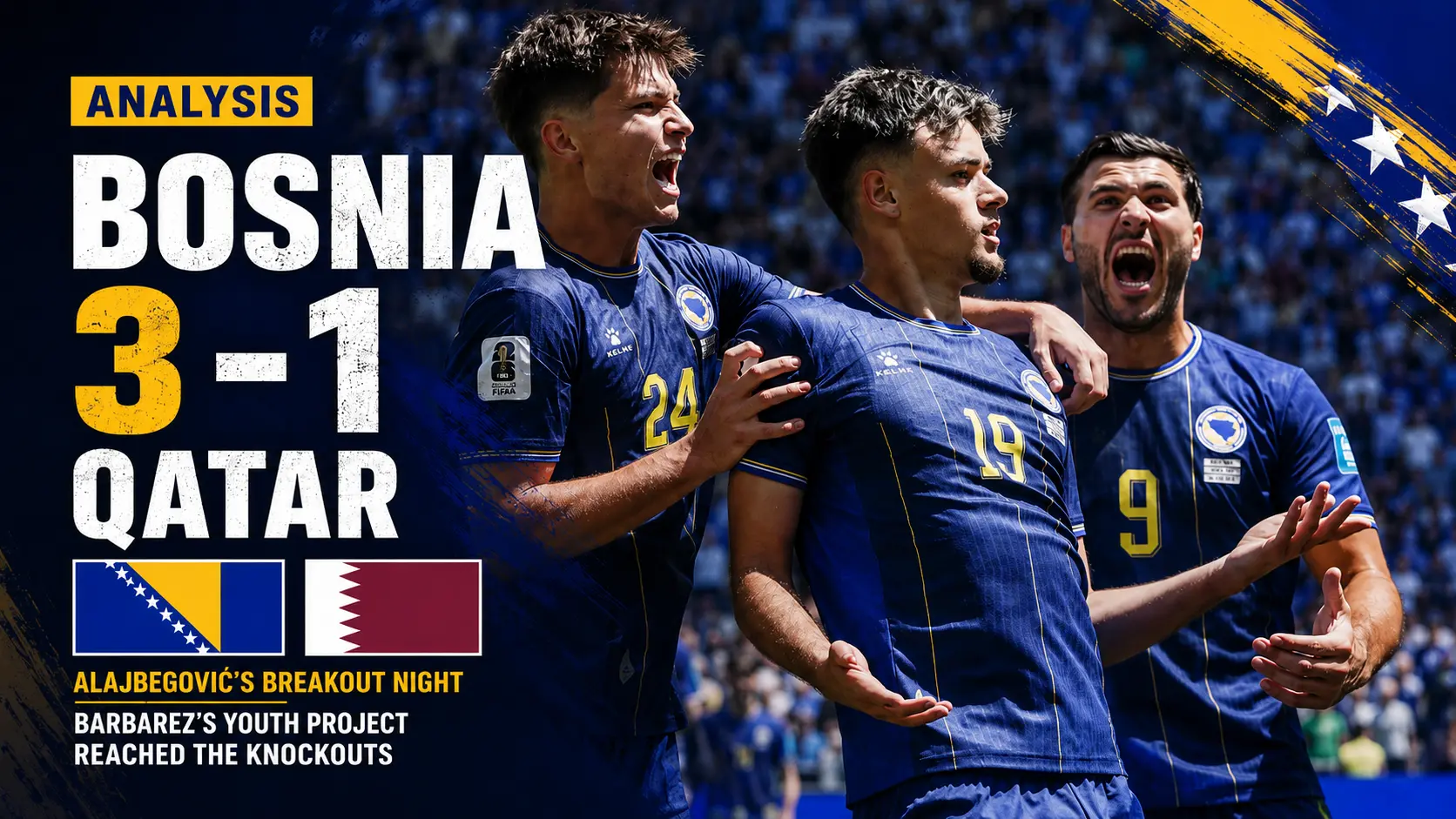
Eighteen-year-old Kerim Alajbegović announced his arrival on the world stage with a composed first-half finish that opened the scoring for Bosnia and Herzegovina, setting the tone for a comprehensive 3-1 victory that eliminated Qatar and kept the Dragons’ knockout hopes flickering. The Bosnia and Herzegovina vs Qatar match page records the historic moment in the 23rd minute when the teenager, who was not even born when Bosnia made their World Cup debut in 2014, latched onto a loose ball inside the penalty area and fired low past the Qatari goalkeeper Meshaal Barsham. Qatar’s misfortune compounded ten minutes later when a dangerous Bosnian cross from the right flank deflected off center-back Bassam Al-Rawi for an own goal, doubling the lead and exposing the defensive fragility that has plagued the Maroon throughout their North American campaign.
Bosnia’s four-point tally and minus-one goal difference places them in contention for one of the best third-place qualification spots available in the expanded 48-team format. The World Cup 2026 Group B standings and fixtures show the Dragons finished behind Switzerland and Canada, yet their four points represent a significant achievement in the context of third-place comparisons across the twelve groups. Should results in other groups favor teams with three or fewer points, Bosnia would secure their first-ever World Cup Round of 32 appearance, a historic milestone for the nation that gained independence in 1992.
Qatar’s tournament concluded with a solitary point and a minus-eight goal difference, a stark decline from the resilience shown in their opening 1-1 draw against Switzerland. The hosts of the 2022 tournament followed that promising result with a devastating 6-0 defeat to Canada and this final 3-1 loss, confirming their elimination before the knockout phase. Unlike their organized defensive display against the Swiss, Qatar’s backline unraveled after falling two goals behind, unable to mount the psychological recovery necessary to salvage their campaign despite Hassan Al-Haydos pulling one back before halftime with a well-taken consolation strike.
Barbarez’s Tactical Evolution: From Swiss Caution to Qatari Aggression
Sergej Barbarez abandoned the defensive caution that collapsed against Switzerland in favor of an aggressive high-pressing system that trusted youth over experience and ultimately overwhelmed Qatar’s brittle defensive structure. The 4-1 defeat to the Swiss in the tournament opener exposed the fundamental limitations of a conservative 5-4-1 setup that invited sustained pressure without possessing the midfield discipline or transitional speed to absorb counter-attacks effectively. Against Canada, Barbarez adjusted to a more balanced 4-2-3-1 that secured a valuable 1-1 draw through disciplined counter-attacking, but against Qatar, the Bosnian manager fully committed to attacking principles by deploying Alajbegović and Edin Džeko in a two-striker system from the first whistle, pressing high up the pitch and denying the Maroon time to build from the back.
The 18-year-old’s breakout performance raises important questions about the sustainability of Bosnia’s generational transition rather than merely celebrating a single night of promise. Alajbegović’s intelligent movement and clinical finishing suggested a maturity beyond his years, yet the space he exploited resulted partly from Qatar’s early defensive disorganization and the psychological damage of the own goal. Whether this represents genuine sustainable change in Bosnian football or an artificial inflation created by Qatar’s collapse will only become clear in potential Round of 32 fixtures against higher-caliber opposition that possesses the defensive cohesion to withstand initial pressure and physical intensity.
Qatar’s aging defensive structure demonstrated a brittleness that contrasted sharply with the resilience they showed in securing a point against Switzerland earlier in the tournament. Where the Maroon successfully absorbed Swiss pressure through organized blocks and quick transitions in their opener, the same personnel appeared psychologically shattered after conceding twice before halftime against Bosnia. Veteran defender Abdelkarim Hassan and goalkeeper Barsham, both mainstays of the 2022 hosting squad, struggled to communicate and coordinate as Bosnia’s youthful energy exposed gaps that did not exist in their earlier, more cautious tactical setup, ultimately allowing Mahmić to seal the result with a late third goal.
What East African Fans Should Watch Next in the Round of 32 Race
Bosnia’s four points and minus-one goal difference keep them mathematically alive for the Round of 32, and Kenyan supporters should monitor the conclusion of other groups to see if the Dragons secure a historic first-ever knockout spot via the best third-place qualification route. The 48-team format advances the top two from each of the twelve groups plus the eight best third-placed teams, meaning Bosnia’s total likely places them on the favorable side of the cutoff line. Kenyan viewers tracking the full World Cup 2026 schedule in Kenya Time (EAT) should watch for final group matches in Groups A, C, and D, where third-place teams with three points or inferior goal differences could confirm Bosnia’s progression.
Kenyan football enthusiasts following the qualification drama in East Africa Time (UTC+3) can expect confirmation of Bosnia’s fate within hours of the final Group B whistle, with potential Round of 32 opponents including winners or runners-up from Groups A, C, or D depending on final seedings and the complex third-place ranking calculations. The FIFA hub at Pulser will provide updated standings as third-place comparisons become clear across the concurrent final matchdays happening in the early hours of June 25 and 26 across Kenyan time zones. Should Bosnia advance, their Round of 32 fixture would likely take place on June 29 or 30 at venues across the United States, with kickoff times scheduled for evening slots in North America that translate to early morning hours between 02:00 and 06:00 EAT, requiring dedicated fans to set alarms for the potential historic occasion.
Kenya’s Harambee Stars can draw valuable lessons from Bosnia’s successful integration of 18-year-old talents like Alajbegović into a senior World Cup squad, particularly regarding the strategic bravery required to blood youth on football’s biggest stage. Barbarez’s decision to trust teenagers in must-win situations demonstrates that the expanded 48-team format offers smaller nations not only greater qualification probability but also valuable tournament experience for emerging generations. East African federations preparing for 2030 qualification campaigns should note how Bosnia leveraged their diaspora pipeline and youth academies to complement veteran leadership, creating a balanced squad capable of competing physically while maintaining technical composure under pressure against established footballing nations.