
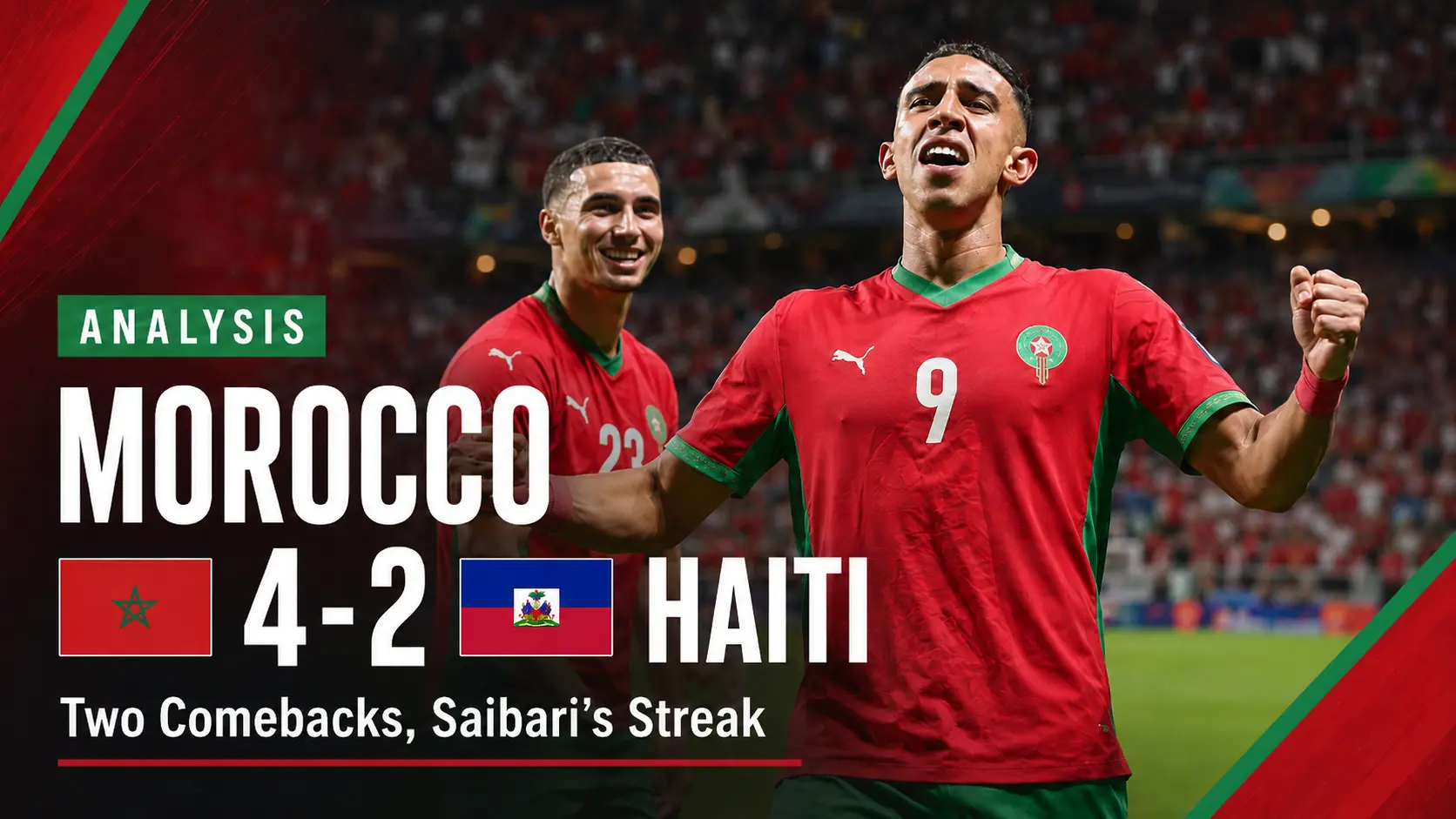
From Two Goals Down: How Morocco Survived Haiti’s Historic World Cup Fightback
Morocco survived Haiti’s historic fightback by relying on individual brilliance from Achraf Hakimi and Ismael Saibari to erase two first-half deficits, with second-half substitutes later sealing the victory that confirmed their runners-up status. Haitian attackers, operating under coach Sébastien Migné’s explicit refusal to adopt conservative tactics, stunned the Atlas Lions with two separate leads during an open first half. These strikes ended a 52-year World Cup scoring drought for the Caribbean nation, rewarding a philosophy that prioritized honor over damage limitation even after earlier losses to Scotland and Brazil had mathematically eliminated them from contention.
Paris Saint-Germain defender Achraf Hakimi and midfielder Ismael Saibari provided the immediate responses required to keep Morocco’s qualification hopes alive before halftime. Hakimi’s equalizer demonstrated the technical execution and composure under pressure that separates established football nations from debutants on the biggest stage. Saibari’s fifth goal of the tournament continued a remarkable individual scoring streak that has now defined Morocco’s attacking identity in the competition, drawing him level with the tournament’s leading marksmen.
Second-half substitutes Soufiane Rahimi and Yassine Gessime delivered the decisive blows that completed Morocco’s double comeback. The 4-2 result secured seven points and a +3 goal difference for the North Africans, confirming their status as Group C runners-up while sending Haiti home with zero points but restored continental pride. Full details of the match timeline are available in the Morocco vs Haiti full match report and timeline.
Ouahbi’s Tactical Gamble: Attacking Evolution or Defensive Exposure?
Mohamed Ouahbi’s tactical shift constituted a high-risk gamble that delivered attacking rewards and qualification but simultaneously exposed defensive frailties hidden in earlier matches. Moroccan adjustments saw an extra striker introduced early as the coach prioritized securing the three points and improving goal difference over the disciplined low-block that frustrated Brazil in the 1-1 draw and the organized pressing that subdued Scotland in the 1-0 victory. This attack-first philosophy created a stretched, end-to-end contest that contrasted sharply with the controlled, defensive solidity displayed in the opening two fixtures.
The concession of two goals to an already-eliminated opponent raises legitimate questions about whether Morocco’s earlier defensive solidity masked systemic vulnerabilities in the backline. Alternatively, the open nature of the contest may represent a necessary calculated risk to avoid dropping points and facing the uncertainty of the third-place qualification pool.
Ismael Saibari’s continued scoring run underlines the attacking dividends of Ouahbi’s aggressive posture. However, the transitional spaces exploited by Haiti suggest potential difficulties against organized Round-of-32 opponents that will punish similar defensive lapses more ruthlessly than the debutants managed.
Kenya Viewer Guide: Morocco’s Round-of-32 Path and African Representation
Kenyan supporters can now mark their calendars for a cross-group Round-of-32 match involving Morocco, as the runners-up finish secures progression to a knockout stage fixture played in East Africa Time but demands urgent tactical adjustments before kickoff. The seven-point total places the Atlas Lions into a cross-group Round-of-32 tie against a group winner, rather than a potentially favorable matchup against one of the best third-place qualifiers. This pairing raises the stakes and alters the difficulty level significantly, requiring Ouahbi to resolve the defensive coordination issues that allowed Haiti to score twice before facing stronger opposition.
East African viewers following African teams in the expanded 48-team tournament now have a key continental contender to support in the knockout stages. All remaining Morocco fixtures will air at times accessible to World Cup 2026 schedule in Kenya Time (EAT) viewers without daylight saving complications, ensuring fans in Nairobi, Mombasa, and across the region can follow the knockout campaign live.
Haiti’s honorable exit with zero points but historic goals offers a template for future debutants, while Morocco must address their defensive fragility before their knockout opener. Exact fixture dates, kickoff times, and broadcast details are available through Pulser’s FIFA hub and the dedicated Group C final standings and qualification scenarios page.