
The Step-by-Step Ranking Criteria FIFA Applied
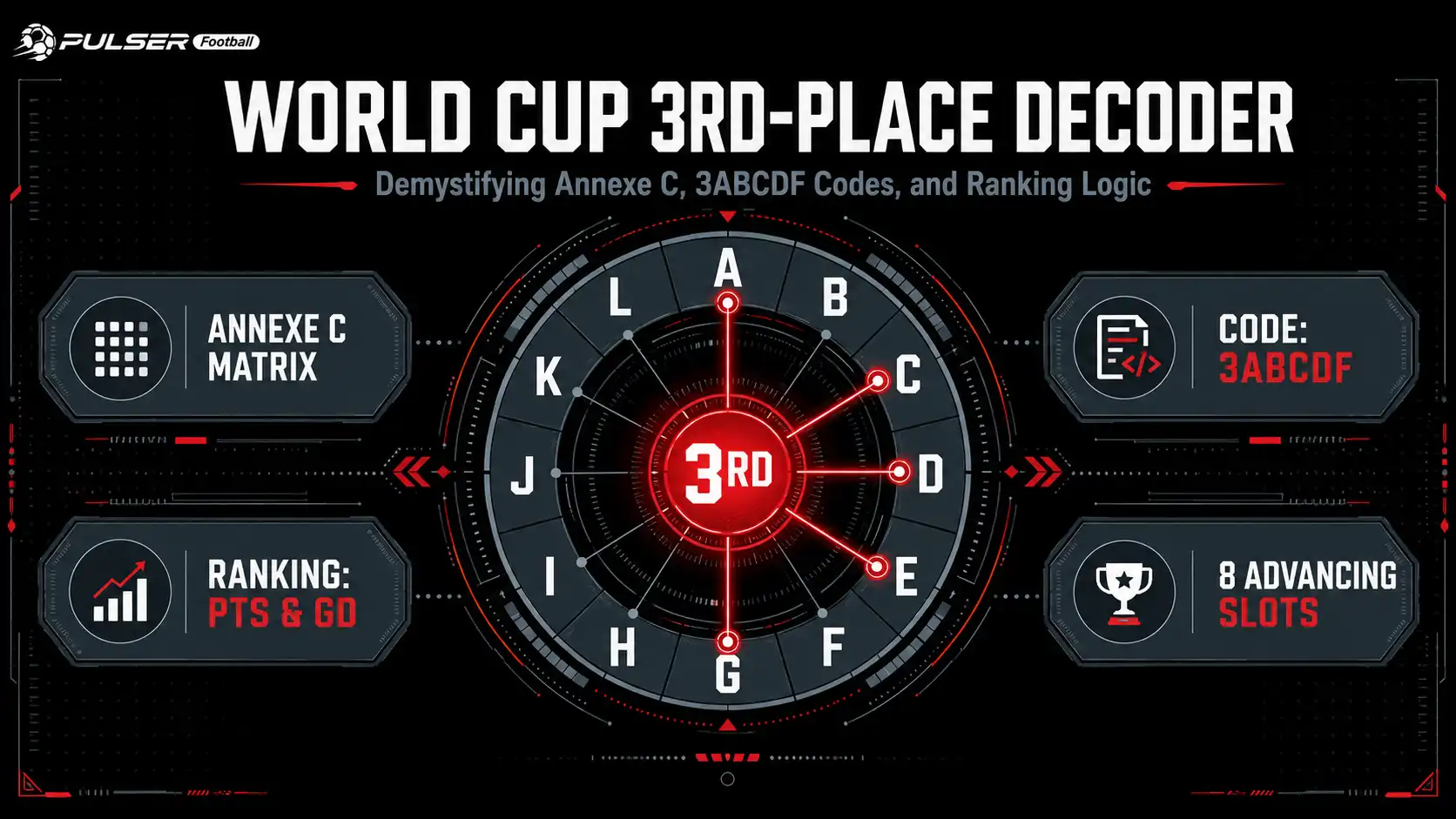
FIFA applied five specific criteria in descending order of priority to rank the 12 third-placed teams, starting with points obtained and ending with drawing of lots if necessary.
Points obtained in all three group matches served as the foundation of the ranking, with teams receiving three points for each victory and one point for each draw to establish the initial order among the 12 third-placed finishers. Teams with higher point totals immediately secured superior positions in the preliminary ranking, creating clear separation between those who had performed strongly in their respective groups and those who had struggled to accumulate results. This primary filter often resolved the majority of positioning disputes before subsequent criteria became necessary, establishing a clear hierarchy based solely on match outcomes.
Goal difference calculated across all group stage matches acted as the second criterion, separating teams that had accumulated identical point totals by measuring goals scored against goals conceded. FIFA subtracted the total number of goals allowed from the total number of goals scored to produce a net figure, with higher positive differences earning preference over lower or negative ones. This mathematical approach rewarded teams that had competed aggressively while punishing those that had suffered heavy defeats even if they managed to secure the same number of points as rivals, ensuring that defensive resilience and attacking potency both contributed to the final standing.
Total goals scored provided the third benchmark when points and goal difference were tied, followed by disciplinary points based on yellow and red cards, and ultimately the drawing of lots if all other criteria remained equal. Goals scored favored attacking sides that had managed to find the net frequently despite failing to win enough matches for automatic advancement, prioritizing offensive contribution over defensive solidarity when previous metrics failed to separate competitors. Disciplinary points assigned values to cautions and dismissals, with fewer infractions resulting in better rankings, while the drawing of lots represented the final resort for breaking deadlocks that persisted through every statistical measure.
World Cup 2026 best third-place standings provides the complete ranked table showing exactly how these criteria determined the final order.
How the Criteria Separated Adjacent Positions in the Final Standings
Specific criteria determined the fate of teams occupying adjacent positions in the final ranking, with goal difference and goals serving as the decisive factors between qualification and elimination.
The contest between the teams ranked eighth and ninth illustrated how goal difference determined the final qualification spot, with the eighth-ranked team advancing to the Round of 32 while the ninth-ranked team faced elimination despite having the same point total. Both sides had finished their respective groups with identical point hauls, forcing FIFA officials to examine the margin by which each team had won or lost their matches across all three fixtures. The superior goal difference recorded by the eighth-place side proved sufficient to secure one of the eight available knockout berths, while the ninth-place finisher concluded their tournament despite matching their rival’s points tally, demonstrating the harsh precision of the ranking system.
The comparison between positions ninth and tenth demonstrated instances where total goals scored became the deciding factor after points and goal difference failed to separate the sides. These teams had not only finished level on points but had also achieved identical goal differences across their three group matches, requiring FIFA to look at offensive production as the differentiator rather than defensive stability. The side that had managed to score more goals during the group stage claimed the higher position, highlighting the premium placed on attacking intent even when overall defensive and offensive balances were statistically equivalent, though neither team ultimately qualified for the next phase.
Teams occupying the eleventh and twelfth positions were distinguished by either disciplinary records or the drawing of lots in the rare cases where all performance-based metrics were statistically identical. Yellow and red card accumulations provided the fourth criterion for separation, with cleaner disciplinary records earning precedence over teams that had accumulated multiple cautions or dismissals during their three group games. In the exceptional scenario where two teams remained inseparable even after comparing cards, FIFA conducted a formal drawing of lots to assign final positions and confirm which side would occupy the last place in the 12-team ranking, ensuring every position was definitively determined.
Accessing the Complete Third-Place Rankings
Pulser Kenya provides comprehensive resources for examining the final third-place standings and understanding how the criteria affected specific teams.
The full ranked table displaying all 12 third-placed teams from first to twelfth position shows exactly how the tie-break criteria were applied to each entrant without reproducing the complex Annexe C pairing mechanics. This resource presents the complete statistical breakdown including points totals, goal differences, and goals scored for every third-placed finisher, allowing supporters to trace precisely why certain teams qualified while others did not. World Cup 2026 best third-place standings offers this detailed view for readers seeking to analyze the final hierarchy and understand the specific numbers behind each team’s position.
Kenya-based supporters can view the standings alongside kick-off times converted to East Africa Time, ensuring local fans understand when the advancing teams entered the knockout phase. The Full World Cup 2026 schedule in Kenya Time displays all Round of 32 fixtures featuring the eight advancing third-placed teams, with conversions to UTC+3 preventing confusion about international kick-off schedules. East African audiences benefit from this localization, as they can plan viewing sessions without calculating time differences between Kenyan cities and North American host venues, ensuring they do not miss the opening matches of the knockout stage.
The FIFA hub serves as the central navigation point for broader tournament coverage, connecting readers to group-specific pages and individual match details that contextualize the third-place rankings. This portal links to detailed breakdowns of each group from which the third-placed teams emerged, providing background on the specific matches that produced the points, goal differences, and disciplinary records used in the ranking process. Supporters can cross-reference the third-place standings with original group results to understand exactly how each team accumulated their final statistics, creating a comprehensive picture of the tournament’s opening phase.
FAQ
How many of the twelve third-placed teams qualified for the Round of 32?
Eight teams advanced to the knockout stage while four were eliminated based on the final ranking criteria.
Were head-to-head results used to separate third-placed teams from different groups?
No, head-to-head results were not considered because third-placed teams came from different groups and did not play against each other during the group stage.
What was the final tie-breaker if teams were equal on points, goal difference, goals scored, and disciplinary record?
The FIFA Organising Committee conducted a drawing of lots to determine which team received the higher ranking.
Reference
- Standings | FIFA World Cup 2026™
- FIFA World Cup 26™ Regulations
- What Is the Format for the FIFA World Cup 2026 Tournament?
- World Cup 2026 Groups: How Teams Qualify and Tie-breakers
- World Cup 2026: Qualified and Eliminated Teams