
How Japan and Sweden Secured Their Round of 32 Spots in Group F
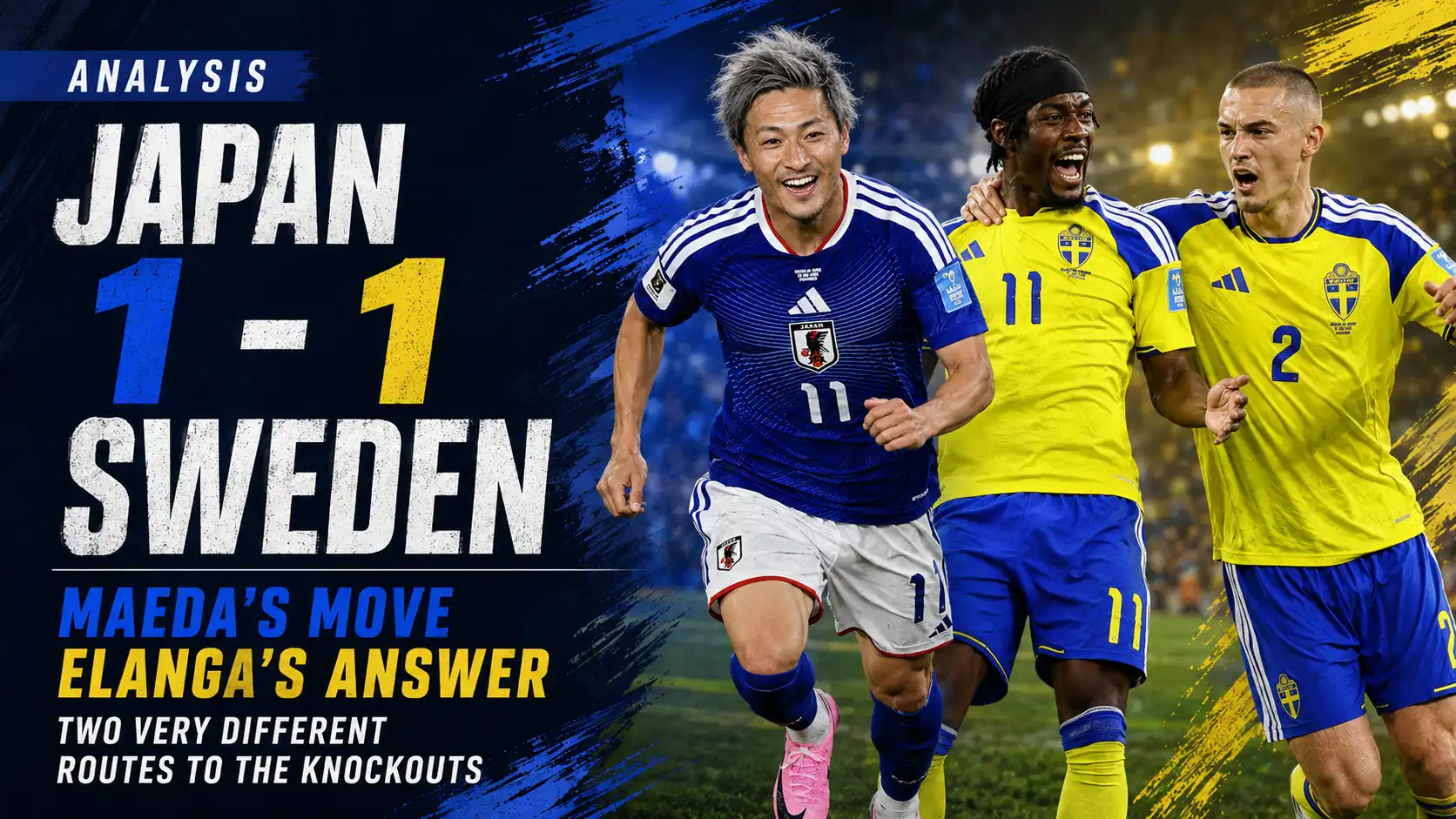
Japan and Sweden secured their progression to the knockout stage through a combination of earlier group results and the point gained from their 1-1 draw on the final matchday, with both sides advancing under the tournament’s expanded format. Daizen Maeda finished a patient Japanese attacking sequence in the 56th minute to give the Samurai Blue the lead, utilizing the compact positional play that Hajime Moriyasu has instilled in the squad throughout the tournament. Sweden responded six minutes later when Anthony Elanga used his raw pace to punish any defensive hesitation, grabbing the equaliser that ultimately proved vital for their qualification hopes and prevented Japan from topping the group.
Japan finished the group stage in second position with five points and a plus-four goal difference, building upon their opening 2-2 draw against the Netherlands with a comprehensive 4-0 victory over Tunisia in their second fixture. Sweden claimed third place with four points and a plus-one goal difference, recovering from their heavy 5-1 defeat to the Dutch by beating Tunisia 5-1 in their second fixture to create a decisive goal difference advantage over the eliminated North African side. The Group F standings and results confirm that both teams accumulated sufficient points to advance, with the top two finishers automatically progressing alongside the best third-placed sides from the twelve groups.
Knockout stage bracket implications see Japan facing Brazil in the Round of 32, presenting a significant tactical challenge for Moriyasu’s rotation-heavy system against South American intensity. Sweden’s progression via the best-third-place route keeps their tournament alive despite the earlier thrashing by the Netherlands, though their next opponent remains dependent on final calculations across other groups before the full bracket is confirmed. Kenyan fans should consult the full World Cup 2026 schedule in Kenya Time to catch these fixtures live in East Africa Time (UTC+3), avoiding confusion caused by the multiple time zones across the Canada-Mexico-USA host nations.
Tactical Contrasts: Moriyasu’s Compact Play Against Potter’s Direct Response
Hajime Moriyasu deployed a compact positional system that relied on squad rotation and intricate combinations rather than direct runs or overwhelming individual brilliance. Daizen Maeda’s goal originated from exactly this approach, with coordinated passing movements breaking down Sweden’s organised defence through patience and technical precision rather than physical dominance. The Japanese manager’s faith in tactical flexibility allowed multiple players to interchange positions throughout the final third, creating the space for Maeda to finish inside the box after sustained build-up play.
Graham Potter set Sweden up in a noticeably more direct style, with the decision to start Anthony Elanga proving crucial to their attacking threat and ultimate survival in the competition. Elanga’s pace exposed Japan’s backline for the equaliser, offering a clear reaction to the tactical lessons learned from the 5-1 thrashing by the Netherlands earlier in the group stage when Sweden struggled against high-quality technical play. Potter’s adjustment acknowledged that verticality and athleticism would trouble Japan more than sustained possession, a gamble that paid dividends when the winger found space behind the defence to finish clinically.
Match analysts continue to debate whether Japan surrendered control too soon after Maeda’s opener by sitting deeper into a defensive block, or whether Potter’s tactical adjustment and Elanga’s introduction simply forced the issue through superior athleticism and directness. Defensive caution appeared to creep into the Japanese display following the goal, with the midfield dropping back to protect the lead rather than maintaining their earlier intensity. The Japan vs Sweden match report details how these contrasting managerial philosophies created an evenly contested second half where neither side could find a winner despite several half-chances.
What Kenyan Fans Should Watch Next in the Knockout Stage
Japan’s upcoming Round of 32 fixture against Brazil will test whether Moriyasu’s rotational system can handle South American technical quality and attacking intensity on the biggest stage. Kenyan viewers should verify kick-off times in East Africa Time to avoid missing matches scheduled across multiple time zones in the Canada-Mexico-USA host nations, as the 104-match tournament spans six different time zones that create challenging viewing hours for East African audiences. The full World Cup 2026 schedule in Kenya Time provides converted kick-off times for all remaining fixtures, ensuring fans do not miss the early morning or late-night starts common during North American tournaments.
Sweden’s survival via the best-third-place rankings means they face a yet-to-be-determined opponent in the next round, with their reliance on Elanga’s pace likely to remain a key tactical weapon against teams that play a high defensive line. Teams that commit numbers forward or maintain a high backline could prove vulnerable to Sweden’s direct transitions, particularly if Potter continues to favour vertical passing over patient build-up against technically superior opponents. The Scandinavian side’s ability to recover from the Netherlands debacle suggests mental resilience that could serve them well in the single-elimination phase, where one moment of individual brilliance can decide tight contests.
Kenyan football enthusiasts can stay updated on both teams’ progress through the FIFA hub and dedicated schedule pages, essential tools for navigating the expanded 48-team format’s complex knockout bracket. The revised tournament structure rewards third-place qualification with additional fixtures and potential pathways to the latter stages, meaning Sweden still harbour ambitions of a deep run despite finishing behind Japan and the Netherlands in Group F. Regular checks of Pulser’s coverage will ensure fans do not miss kick-off times, bracket updates, or tactical analysis as the 2026 World Cup progresses toward the final.