
The 48-Team Math Behind 12 Groups
The 12-group structure exists because FIFA expanded the tournament from 32 to 48 teams, and 48 divided by four equals exactly 12 groups. FIFA’s expansion to 48 teams for the 2026 edition across Canada, Mexico, and the United States required a new group stage structure. Previous tournaments since 1998 used eight groups of four teams to accommodate 32 nations. The new format keeps the four-team group size that fans recognize while scaling up to fit the larger field.
Mathematical division provides the simplest explanation for the change. Forty-eight participating nations divided into four-team groups results in exactly 12 groups with no remainder or complicated tie-breaking scenarios for qualification. This structure ensures every team still plays three group matches, maintaining the traditional World Cup group stage experience.
Football federations from Africa, Asia, and CONCACAF gain additional slots in this expanded format. The 12-group system allows FIFA to distribute these extra places across the confederations without altering the fundamental group stage mechanics that have defined the tournament for decades.
How 12 Groups Change the Knockout Path
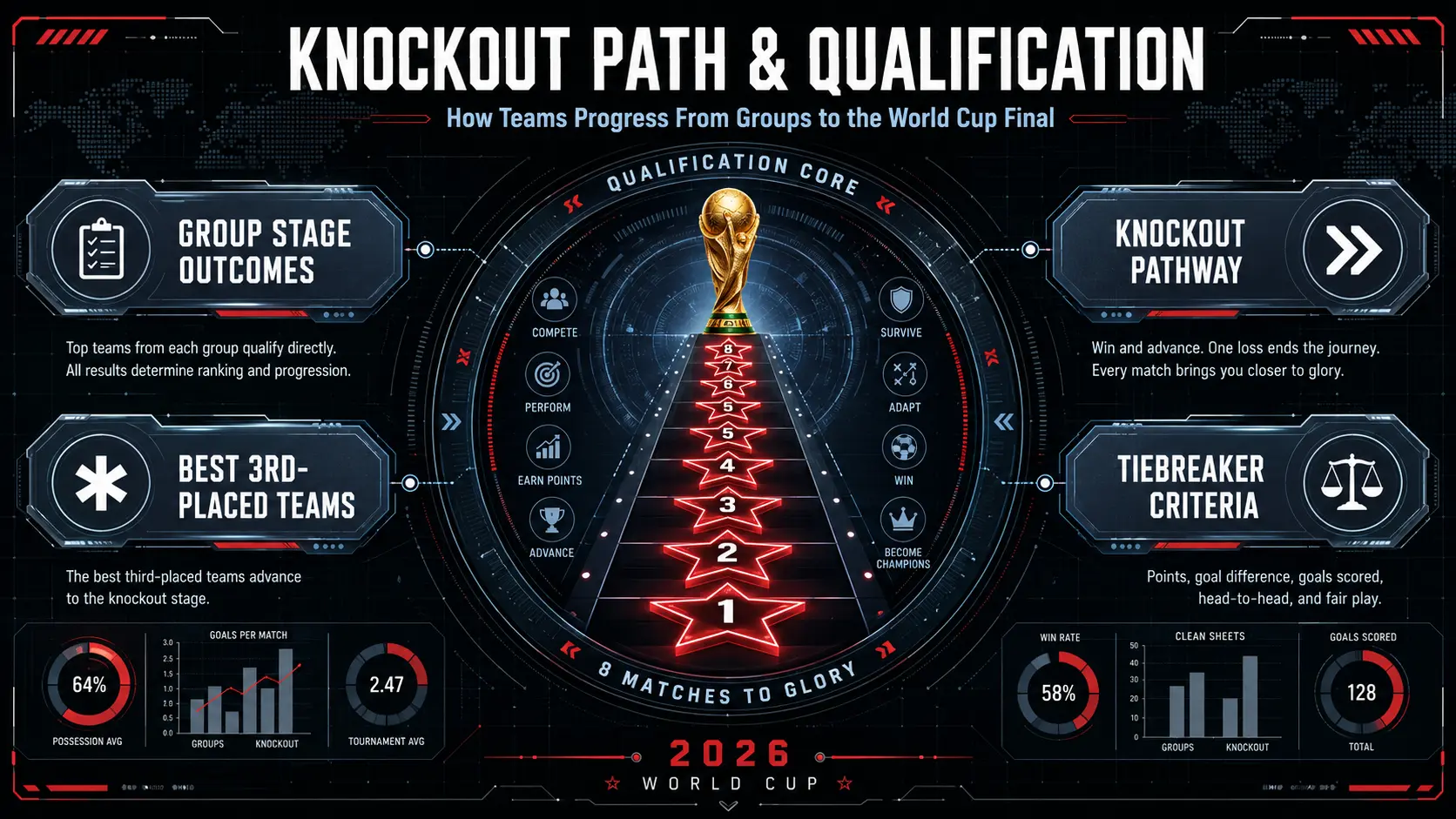
The expansion introduces a Round of 32 as the first knockout stage, replacing the traditional Round of 16, with more teams advancing from the group phase than in previous tournaments. The total tournament increases from 64 matches to 104 matches, extending the competition schedule while maintaining competitive balance across the three host nations. This expansion adds 40 matches to the tournament calendar, spreading fixtures across 16 host cities in three countries.
Advancement rules have adjusted to fill the larger knockout bracket. Each group winner and runner-up automatically advances, joined by the best-performing third-placed teams to complete the 32-team knockout bracket. This means eight third-place finishers will continue to the Round of 32 based on points and goal difference.
The additional knockout round creates more high-stakes matches throughout the tournament. Fans can track these progression scenarios using the groups and teams page to see which third-placed teams might advance as the group stage unfolds.
Following the 12 Groups from Kenya
Supporters in Kenya can track all 12 groups using schedules converted to East Africa Time (EAT, UTC+3), ensuring convenient viewing times without daylight saving complications. East Africa Time remains consistent throughout the tournament period, as Kenya does not observe daylight saving time shifts. This stability simplifies planning for supporters who want to catch specific teams in the morning or evening windows.
The full World Cup 2026 schedule in Kenya Time converts all kick-offs to EAT (UTC+3) for local planning. With matches spread across three countries and multiple time zones in North America, the expanded format offers more viewing opportunities throughout the tournament period.
Pulser provides dedicated pages for each of the 12 groups, allowing fans to follow specific teams and match dates relevant to their interests. Regular updates about tournament developments remain accessible through the FIFA hub, which serves as a central resource for ongoing news about the new format, host cities, and qualification updates relevant to Kenyan supporters.
FAQ
Why did FIFA change from 8 groups to 12 groups in 2026?
The change accommodates the expansion from 32 to 48 teams. Mathematically, 48 teams divided into four-team groups requires exactly 12 groups to maintain the traditional group stage format.
How many teams advance to the knockout stage from the 12 groups?
The tournament features a Round of 32, meaning 32 teams advance from the group stage. This includes group winners, runners-up, and selected third-placed teams.
Will the 12-group format affect when matches air in Kenya?
With 104 matches across three host nations, there are more fixtures to follow. All kick-off times are available on the Pulser schedule page converted to East Africa Time (EAT, UTC+3) for local planning.
Reference
World Cup 2026 | Match schedule, fixtures & stadiums
Qualified teams for the FIFA World Cup 2026
All the World Cup 2026 squad announcements
Africa’s World Cup hopefuls await 2026 draw as historic 48-team tournament takes shape
World Cup 2026 groups: How teams qualify and tie-breakers