
How Third-Place Teams Advance to the Round of 32
Eight third-place teams advance to the Round of 32 alongside the 24 automatic qualifiers from group winners and runners-up positions.
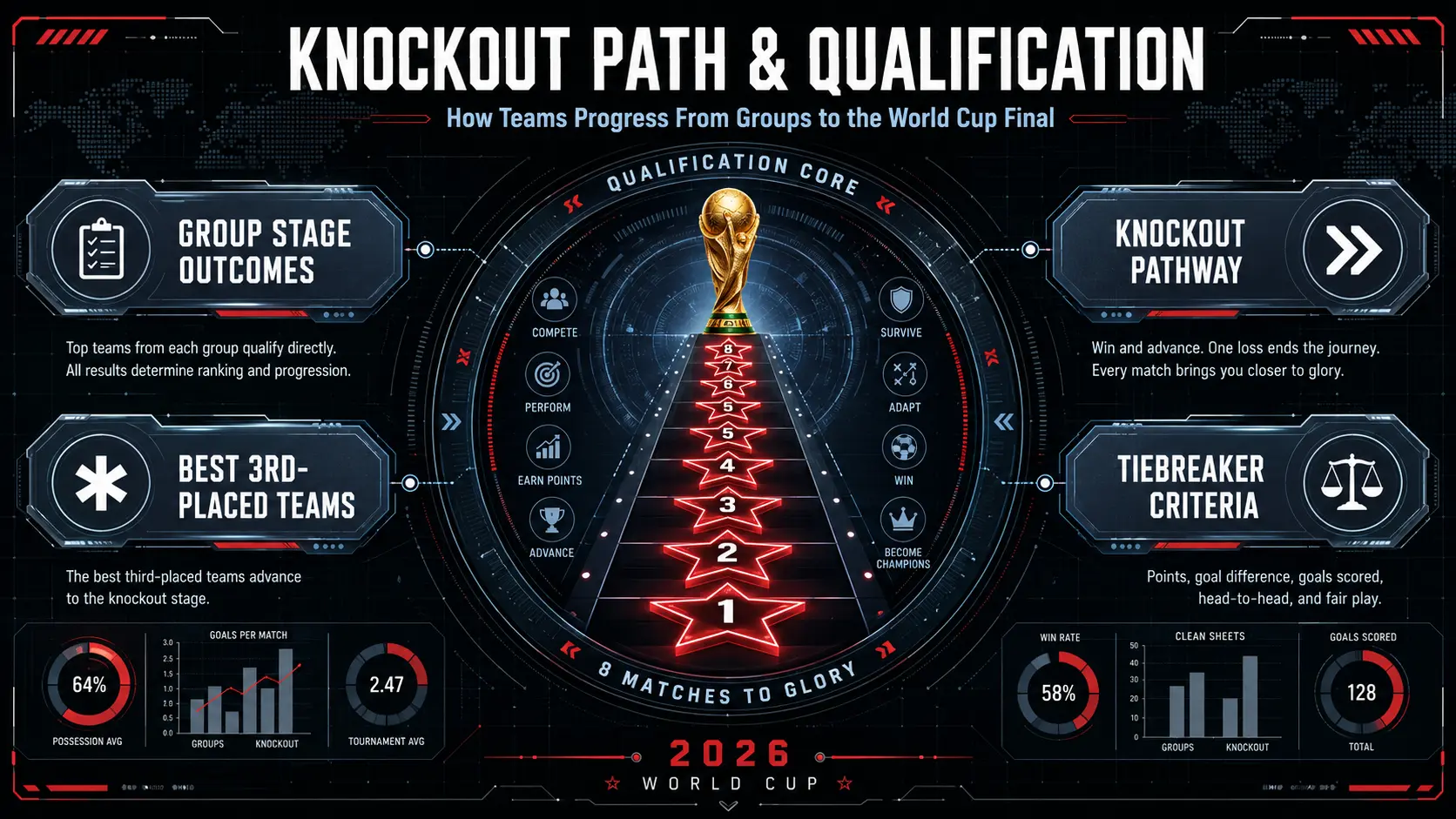
The expanded 48-team tournament creates 12 groups of four teams each. Group winners and runners-up automatically qualify for the knockout stage, accounting for 24 teams. The remaining eight spots in the Round of 32 go to the best third-place finishers across all groups, selected by points, goal difference, and goals scored in their three matches.
Previous World Cup formats eliminated teams that finished third in their group immediately after the final whistle of matchday three. The 2026 expansion changes this dynamic entirely, giving squads a second chance even after dropping points in one or two matches. Teams now have mathematical paths to the knockout stage without needing to finish in the top two positions of their specific group.
Kenyan viewers following the tournament in East Africa Time will watch 104 total matches across the expanded competition. The additional knockout round means more football content for fans tracking matches late into the night or early morning hours in Nairobi, Mombasa, and across Kenya. Third-place qualification adds suspense to the final group matches, as teams fight for every goal even when second place seems out of reach.
What the New Format Means for Group Stage Strategy
Teams can now afford to lose one match or draw two matches and still mathematically advance as one of the best third-place finishers, fundamentally changing tactical approaches in early group games.
Conservative defensive tactics in opening matches become less necessary when a single defeat does not eliminate a team from contention. Coaches might deploy more attacking formations knowing that four points or even three points could prove sufficient for progression depending on results in other groups. This shift encourages risk-taking that previous 32-team tournaments rarely saw in opening fixtures.
Goal difference emerges as a critical tiebreaker for third-place qualification. Rankings prioritize points accumulated, then goal difference, then goals scored across the three group matches. Teams level on points will see their fates decided by narrow margins in matches against both stronger and weaker opponents, making every goal valuable even in losing efforts.
Kenyan fans must monitor simultaneous matches across multiple groups during the final matchday to determine which third-place teams qualify. The full World Cup 2026 schedule in Kenya Time helps supporters track these decisive fixtures in East Africa Time (EAT, UTC+3), ensuring they catch the final minutes of games that determine the eight advancing teams. Complex qualification scenarios require fans to follow the group standings and team pages to understand real-time implications as goals are scored.
Track Third-Place Standings on Pulser
Pulser provides real-time tools to monitor points and goal differences across all 12 groups, allowing fans to compare third-place teams and identify which eight are trending toward the Round of 32.
The group standings and team pages display live tables showing exactly how each third-place team compares to rivals in other groups. Visitors can check current rankings, goals scored, and conceded to calculate qualification scenarios without manually comparing statistics across different tables. These pages update automatically as matches conclude, providing immediate clarity on the third-place rankings.
Final group stage matches often kick off simultaneously to preserve competitive integrity and prevent manipulation of results. Fans should check the full World Cup 2026 schedule in Kenya Time to set reminders for these decisive windows, particularly for matches starting at inconvenient hours in the East African night that determine third-place rankings. Understanding the kickoff times in UTC+3 ensures Kenyan supporters do not miss crucial moments that decide qualification.
The FIFA hub serves as the central resource for updated standings and tiebreaker scenarios as the group stage progresses. Bookmarking this page ensures you know exactly which third-place teams advance before the knockout bracket is finalized, giving Kenyan supporters immediate clarity on the 32-team lineup. Regular visits to the hub during the final matchdays provide the fastest updates on which eight third-place teams progress to the next round.
FAQ
How many third-place teams advance to the Round of 32 in World Cup 2026?
Eight third-place teams advance. With 12 groups producing 12 winners and 12 runners-up (24 teams), plus 8 third-place teams, the tournament reaches the 32-team knockout stage.
Can a team with only 3 points advance as a third-place team?
Yes, depending on results in other groups and goal difference, teams with 3 points (one win, two losses) or even fewer may advance as one of the eight best third-place finishers.
Where can I see the third-place rankings in Kenya Time?
Visit the Pulser full schedule page or group pages to track live standings, compare third-place teams across all groups, and view all match times in East Africa Time (EAT, UTC+3).
Reference
World Cup 2026 | Match schedule, fixtures & stadiums
Scores & Fixtures | FIFA World Cup 2026™
Standings | FIFA World Cup 2026™
World Cup 2026 groups: How teams qualify and tie-breakers