
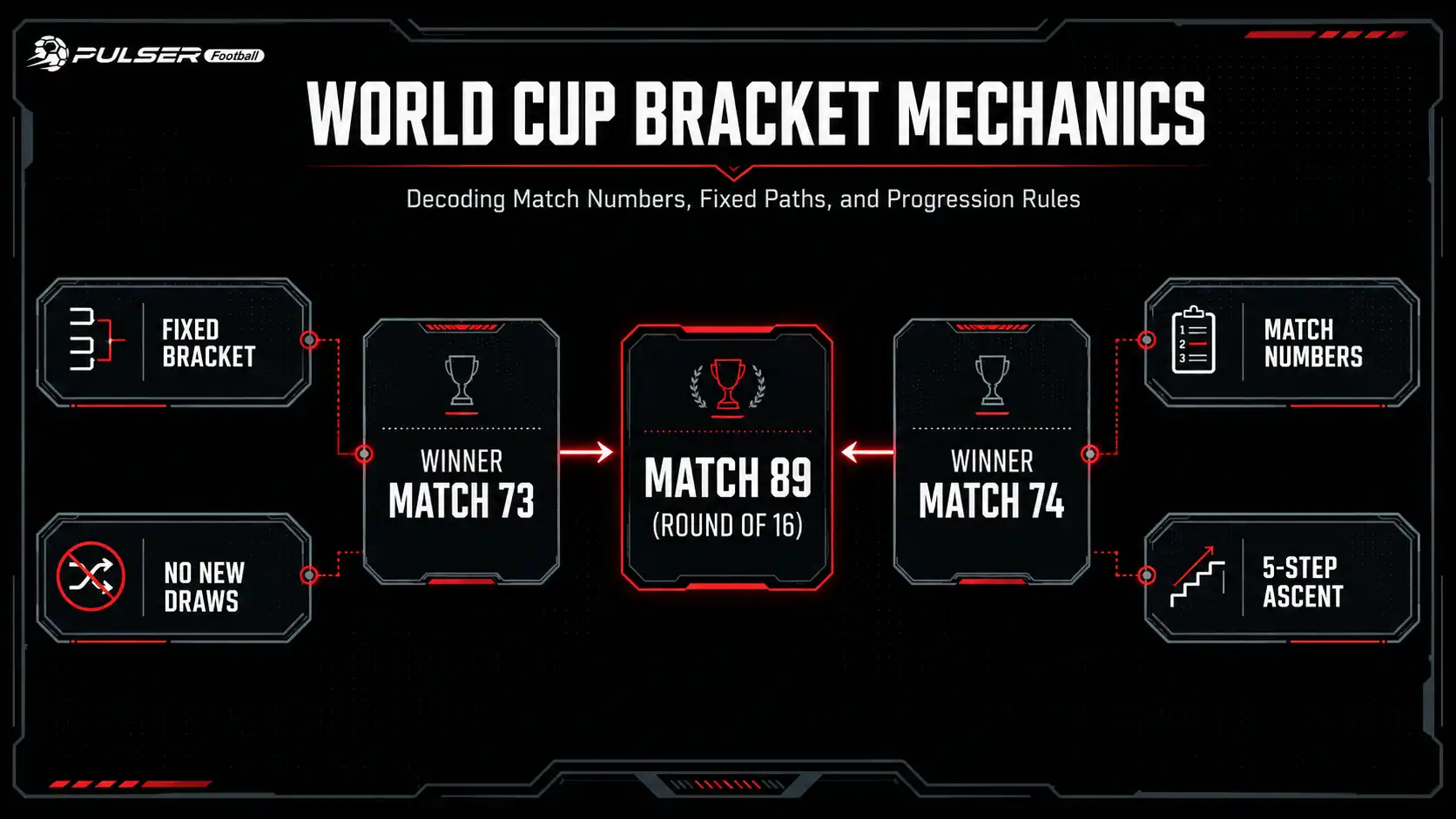
What FIFA Match Numbers Actually Represent
FIFA match numbers are fixed administrative identifiers assigned sequentially from Match 1 through Match 104 for the 2026 tournament, serving purely as reference codes for bracket logistics and scheduling.
FIFA assigns these numeric labels to every fixture across the expanded 48-team format. The sequence runs continuously through all 72 group stage matches and the 32 subsequent knockout fixtures, creating a permanent organizational spine for the competition.
The numbers carry no competitive weight or predictive meaning. A match number does not reflect FIFA rankings, team seeding positions, player shirt numbers, or the anticipated significance of the fixture. Match 1 is simply the first game scheduled, not a contest between the highest-ranked nations.
Tournament organizers publish the complete bracket structure using these numbers months before the final draw. This system locks the knockout pathways in place and enables the use of “Winner of Match X” placeholders while the actual participating teams remain unknown.
How “Winner of Match X” Connects the Knockout Rounds
The placeholder system uses “Winner of Match [Number]” labels to connect rounds without knowing which teams will advance.
Each knockout slot lists a reference to a specific previous fixture rather than a country name. This architectural approach allows the bracket to remain valid and functional regardless of which teams progress from the 12 groups or earlier knockout rounds, accommodating the fact that qualifiers conclude only months before the tournament begins.
Match 74, a Round of 32 fixture, provides a clear example of this system. The winner of that specific match will advance to occupy a predetermined slot in the Round of 16 bracket. World Cup 2026 Round of 32 bracket
This numbering logic applies consistently across all 104 matches. From the opening group fixtures through to the Final, the continuous map creates navigable pathways for every potential tournament outcome without requiring bracket redesigns as teams are eliminated.
Using Match Numbers to Track Fixtures in Kenya Time
Kenyan fans can use match numbers to identify specific knockout slots and corresponding kickoff times in East Africa Time.
Pulser’s single-match pages display these official numbers alongside kickoffs calibrated for East Africa Time. Fans should consult the full World Cup 2026 schedule in Kenya Time to correlate each match number with its specific date, venue in Canada, Mexico, or the USA, and EAT (UTC+3) start time without daylight saving adjustments.
Match numbers differ fundamentally from group table positions such as “1st place Group A.” Fixtures numbered 1 through 72 cover the entire group stage across all 12 groups, while numbers 73 through 104 cover the knockout phase from the Round of 32 to the Final, preventing confusion between a fixture label and a team’s competitive standing.
Fans can cross-reference these numbers with the FIFA World Cup hub to access central navigation for all tournament content. This ensures accurate planning for viewing calendars, accounting for the time difference between East Africa and the host nations.
FAQ
Are World Cup match numbers the same as FIFA team rankings?
No. Match numbers are organizational labels assigned to each fixture for bracket tracking, while FIFA rankings are separate ratings of national team performance. A lower match number does not indicate a better-ranked team.
How many matches are numbered in the 2026 World Cup?
FIFA assigns numbers 1 through 104. This includes all 72 group stage matches (12 groups of four teams) and all 32 knockout matches from the Round of 32 to the Final.
Does a higher match number mean a more important game?
No. The Final is Match 104 simply because it is the last fixture chronologically, not because it is ‘ranked’ higher. Every match number serves an equal administrative function in mapping the tournament bracket.