
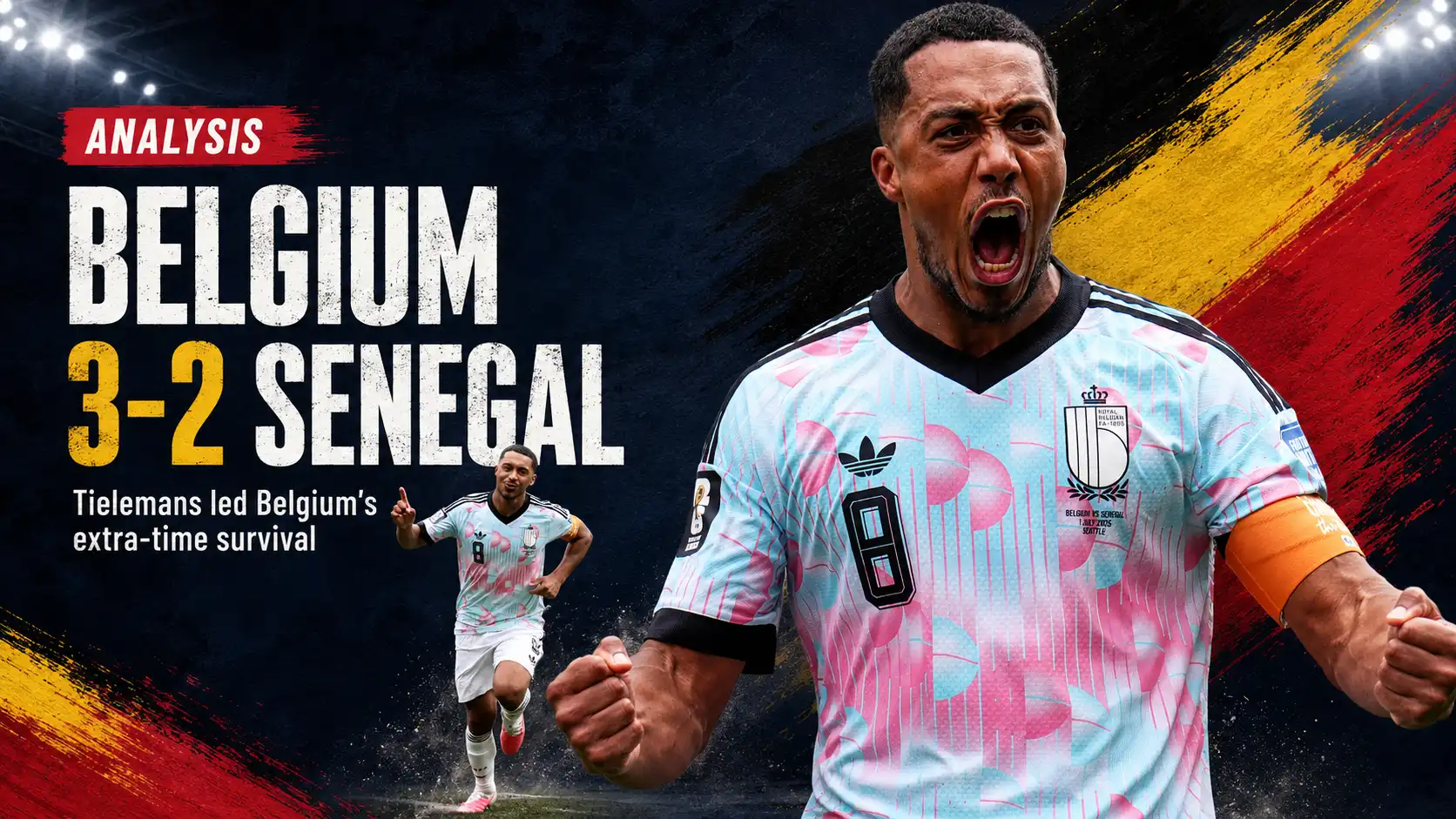
Full-Time Result and Decisive Timeline: How Belgium Survived Extra Time
Belgium secured a 3-2 victory after extra time against Senegal on July 1, 2026, completing one of the most remarkable recoveries of the tournament. Habib Diarra and Ismaïla Sarr had given Senegal a commanding 2-0 lead during the first 85 minutes of play, capitalizing on defensive instability to place Belgium on the brink of elimination. Substitute Romelu Lukaku ignited the revival with an 86th-minute strike, followed immediately by Youri Tielemans’ headed equaliser that forced the additional period.
The 23:00 EAT kickoff time listed on the 2026 FIFA World Cup schedule in Kenya Time meant East African viewers witnessed the dramatic conclusion past midnight on July 2. Extra time extended well beyond the 120-minute mark, with Tielemans’ decisive penalty coming in the 125th minute after a VAR review confirmed the infringement. Kenyan fans tracking the knockout stages needed significant stamina to follow the entire 125-minute marathon that concluded after 01:00 EAT.
The elimination outcome confirms Belgium’s place in the World Cup 2026 Round of 32 bracket advancement path, setting up a Round-of-16 meeting with the United States. Senegal exit the tournament despite their earlier qualification as one of the best third-placed teams, their campaign ending in Seattle after showing tremendous promise for 85 minutes. Belgium’s survival keeps their tournament hopes alive, though the manner of victory raises questions about their defensive organization.
Tactical Analysis: Garcia’s Flaws and Senegal’s Collapse
Rudi Garcia’s initial tactical setup failed to contain Senegal’s transition game for 85 minutes, allowing Pape Thiaw’s aggressive pressing structure to dominate the midfield battle. Senegal’s pace on the counter created numerous chances beyond the two goals, with the African side striking the woodwork twice during their period of control. Belgium’s possession-based approach in the opening hour produced little penetration against Senegal’s compact defensive block, leaving the European side vulnerable to quick turnovers.
Youri Tielemans’ aerial presence and composure fundamentally altered the game’s momentum once Belgium shifted toward direct penalty-area pressure following Lukaku’s introduction. The substitution removed a midfielder in favor of a physical focal point, allowing Tielemans to push higher and target set-piece situations where Senegal’s zonal marking showed cracks. This tactical pivot bypassed Senegal’s press entirely, creating the chaos necessary for both the equaliser and the eventual winning penalty.
Pape Thiaw’s side retreated into a deep defensive shell immediately after establishing the 2-0 cushion, surrendering midfield control and inviting the relentless bombardment that eventually broke their resistance. Senegal’s failure to maintain possession or utilize the flanks to relieve pressure represented a catastrophic failure in game management discipline. The tactical retreat transformed a dominant performance into a defensive siege, exposing the psychological fragility of a squad that had scraped into the knockout phase through the best third-place standings.
Tournament Implications: Resilience Warning or Champion’s Mentality?
Belgium’s dramatic comeback reveals a squad capable of clutch performances under extreme elimination pressure, though the first 85 minutes exposed defensive vulnerabilities that the United States will certainly target. Romelu Lukaku’s predatory instinct and Tielemans’ mental fortitude suggest an experienced core that refuses to accept defeat, yet the initial collapse against Senegal’s press indicates systemic issues in midfield transition defense. The Round-of-16 clash with the USA will test whether this performance represents champion’s mentality or merely a lucky escape against a tactically naive opponent.
The Group G campaign provided a stark contrast to the chaos of this knockout fixture, as Belgium had progressed comfortably with five points and a plus-four goal difference including a commanding 5-1 victory over New Zealand. That group-stage comfort allowed rotation and tactical experimentation, whereas the Senegal match demanded survival-mode football that drained significant physical and emotional energy. Group G final standings confirm Belgium topped their section, but the step up in intensity from group matches to elimination football caught Garcia’s side unprepared for nearly the entire regulation period.
Tactical adjustments remain essential before facing the United States, particularly regarding Garcia’s need to solve the midfield transition vulnerabilities that allowed Senegal’s wingers to create repeated danger. Late-game defensive organization must improve to avoid relying on last-minute heroics, while the squad must handle high-pressure VAR situations with greater composure than shown during the frantic final minutes. Belgium’s path through the FIFA hub continues, but another performance featuring an 85-minute collapse will likely end their tournament against more ruthless opposition.