
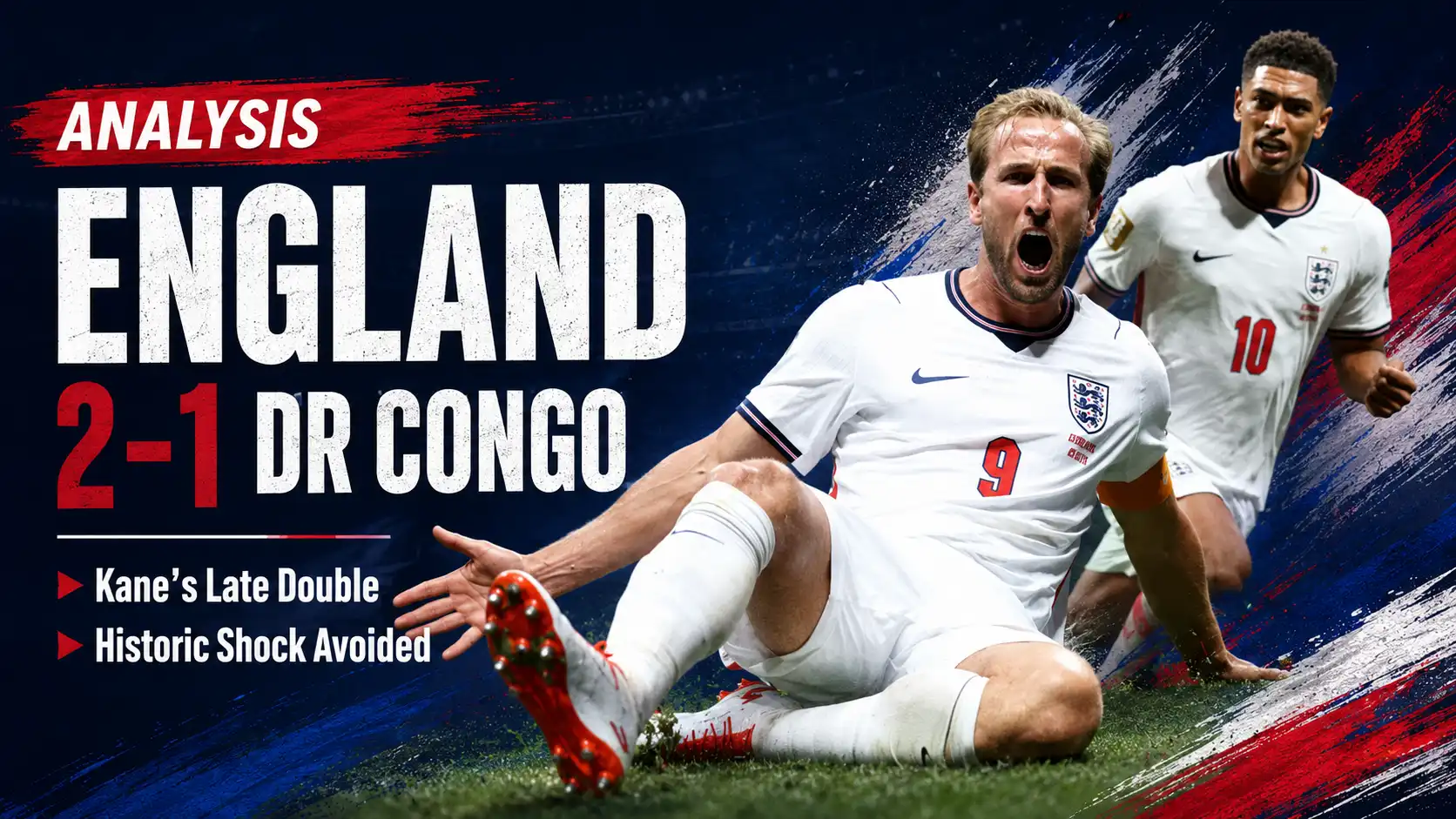
How England Survived DR Conga’s Historic Shock in the Round of 32
England survived through late intervention from Harry Kane after DR Congo threatened one of the tournament’s biggest upsets in the expanded 48-team format. Brian Cipenga punished defensive hesitation in the seventh minute, latching onto a direct attack that caught England’s backline unprepared and handing the Leopards a shock lead that goalkeeper Lionel Mpasi defended with commanding aerial presence and repeated saves for over an hour of knockout football.
Kane’s 75th-minute equalizing header finally broke DR Congo’s resistance, the captain connecting with substitute Anthony Gordon’s precise cross from the left to restore parity. The goal demonstrated the critical impact of England’s bench strength at the decisive moment, as Gordon’s introduction provided the width and delivery that had been absent during the frustrating opening period.
The Bayern Munich striker sealed the turnaround six minutes from time with a powerful strike from outside the penalty area, his second goal securing England’s place in the Round of 16 and preventing elimination against a side that entered the knockout stage as one of the best third-placed qualifiers from the group phase.
Tactical Analysis: Tuchel’s Structural Problems and Desabre’s Proactive Surprise
Sébastien Desabre’s unexpectedly bold tactical approach using four defenders and attacking space directly behind England’s midfield limited the Three Lions’ central influence and exposed vulnerabilities in Thomas Tuchel’s rigid first-half structure. The DR Congo coach abandoned conservative expectations to press high in selected moments, using direct transitions that repeatedly targeted the channel between England’s defensive and midfield lines, a strategy that created Cipenga’s early goal and maintained threat until the final half-hour.
England’s opening 70 minutes produced little clear danger due to a lack of width and attacking urgency, as DR Conga’s compact defensive organization and Mpasi’s shot-stopping repeatedly neutralized the build-up play. Static positioning from England’s midfield created a disconnect with the forward line, leaving Kane isolated and forcing the captain to drop deep in search of possession, which played directly into Desabre’s hands by removing the primary penalty-box threat.
Tuchel’s substitutions transformed the match by providing greater width and tempo, particularly through Anthony Gordon’s delivery for the equalizer, contrasting sharply with the static approach that had dominated the first hour. This reactive rather than proactive management raises questions about whether England’s Group L-winning form masked structural issues that required crisis intervention rather than strategic control to resolve.
Knockout Resilience or Structural Warning? England’s Path to Mexico at the Azteca
England’s dramatic comeback secures a Round-of-16 meeting with Mexico at the Azteca but leaves critical debate over whether the late recovery demonstrates mental toughness or exposes fundamental deficiencies that El Tri will exploit. Kane’s finishing dependency rescued a performance that lacked collective control for 70 minutes, suggesting that opponents with superior technical resources and home advantage may not offer the same reprieve from slow starts that DR Congo’s eventual fatigue provided.
The expanded 48-team tournament format created this matchup through the new best third-placed qualification system, with DR Congo entering the knockout stage as underdogs after accumulating four points and a plus-one goal difference from draws against Portugal and Colombia plus a victory over Uzbekistan. England’s progression as Group L winners with seven points and a plus-four goal difference set up what appeared a favorable tie on paper, yet the narrow escape highlights how the Round of 32 bracket can produce dangerous mismatches in motivation and tactical approach.
Tactical questions Tuchel must resolve before facing Mexico include addressing the slow starts that plagued the first half against DR Congo and determining whether the width provided by substitutes warrants starting changes or remains a knockout weapon for the second half. Kenyan fans planning to watch the next match should consult the World Cup 2026 schedule in Kenya Time for kickoff details at the Azteca, where England will face significantly greater pressure to control possession from the opening whistle.