
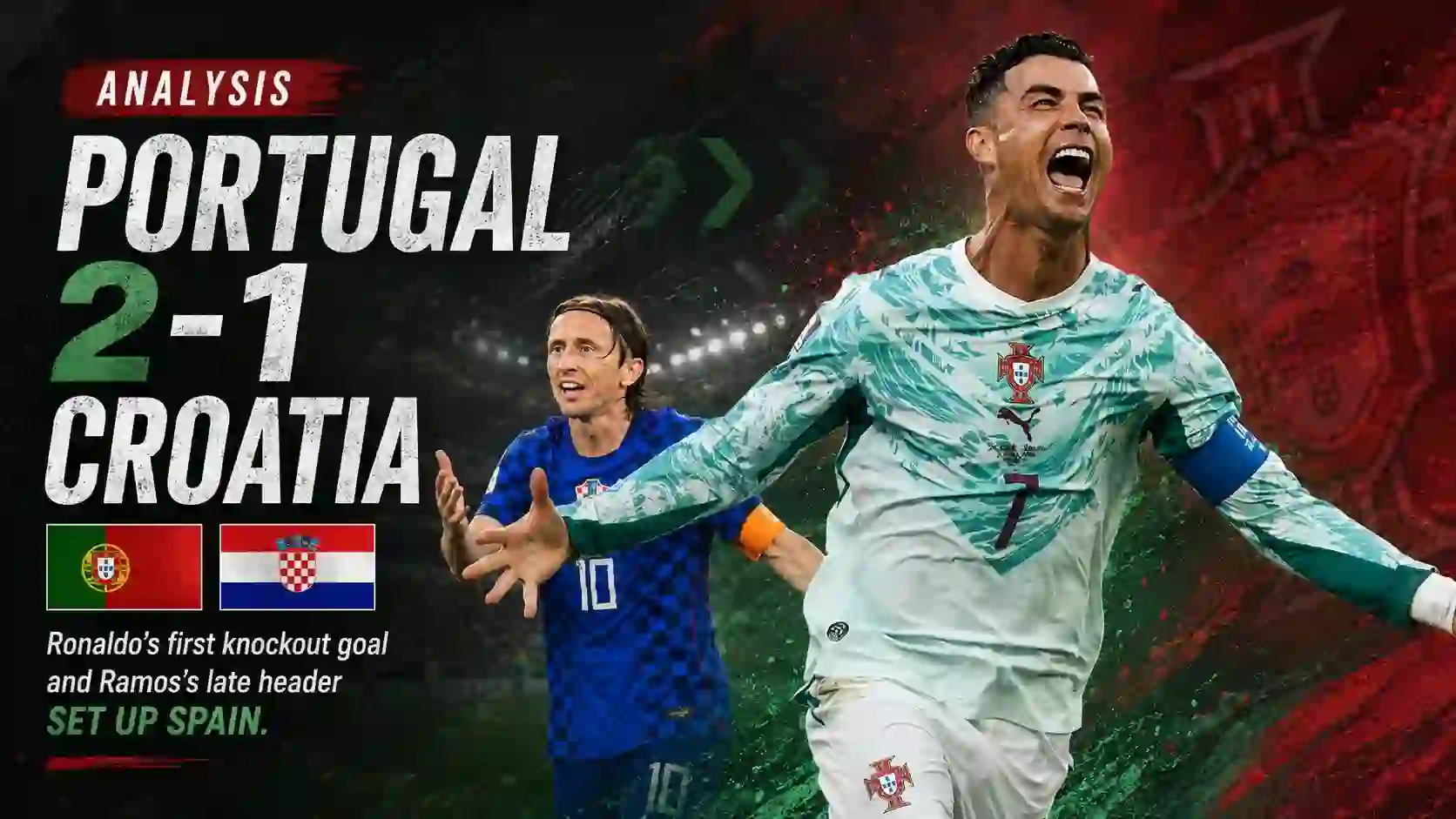
Portugal 2-1 Croatia: Match Result and Decisive Moments in Toronto
Portugal secured a narrow 2-1 victory over Croatia at the Toronto stadium to book their place in the World Cup 2026 knockout stage, while Croatia’s tournament ended in the Round of 32. The final whistle confirmed a last-16 tie against Spain for Roberto Martínez’s side, concluding a tense evening that saw momentum swing between two experienced European sides.
Ivan Perišić gave Croatia a 53rd-minute lead against the run of second-half play, capitalising on a rare defensive lapse to put the Vatreni ahead. Cristiano Ronaldo levelled the scoreline in the 68th minute from the penalty spot, marking his first knockout goal of the tournament and demonstrating his continued influence in World Cup elimination matches. Substitute Gonçalo Ramos headed the decisive winner in stoppage time, rising above the Croatian defence to meet Rafael Leão’s cross and send the Portuguese contingent into celebration.
Croatia pushed for a late equaliser in the dying moments and appeared to have found one through a set-piece scramble inside the penalty area, only for VAR intervention to rule the goal out for offside after video review. The decision confirmed Portugal’s narrow passage despite sustained late pressure from Zlatko Dalić’s side, who exited the competition after showing resilience against a higher-ranked opponent but ultimately falling short in the final exchanges.
Tactical Breakdown: Martínez’s Adjustments vs Dalić’s Midfield Control
Roberto Martínez’s possession-heavy approach dominated first-half circulation without creating clear penalty-area danger, as slow horizontal passing failed to penetrate Croatia’s compact midfield block led by experienced operators. The Portuguese starting XI maintained territorial advantage and completed numerous passes in the middle third, yet lacked the incision to trouble the Croatian defence, with the Vatreni engine room limiting spaces between the lines and forcing shots from distance.
Zlatko Dalić’s defensive system maintained control and shape until the final quarter of the match, when deeper defending invited the sustained Portuguese pressure that eventually produced the winning goal. Croatia’s balanced approach relied on structured transitions and midfield discipline, yet the tactical decision to protect their single-goal lead by dropping deeper into their own half created the crossing opportunities from wide areas that substitute Ramos exploited for the decisive header in added time.
Rafael Leão and Gonçalo Ramos introduced direct running and aerial presence from the bench that Martínez’s starting XI had failed to manufacture during the first hour of play. Leão’s pace on the left flank stretched the tiring Croatian backline, while Ramos’s physicality provided the target for the cross that proved the decisive moment, raising questions about whether these substitutions finally solved Portugal’s attacking balance or merely masked persistent structural issues against organised opposition.
From Group Stage to Spain: Portugal’s Route and Round of 16 Preview
Portugal finished second in Group K with five points and a plus-five goal difference, having drawn with DR Congo and Colombia and beaten Uzbekistan 5-0, earning them this knockout tie against Group L runners-up Croatia. Portugal’s path through the expanded 48-team format placed them against familiar European opposition rather than inter-confederation rivals, setting up a tense but technically familiar contest in Toronto that tested their ability to break down compact defensive blocks.
Croatia entered the match as Group L runners-up with six points and a zero goal difference, recovering from an opening 4-2 defeat to England with victories over Panama and Ghana before falling to Portugal. The Vatreni’s route demonstrated their capacity to bounce back from setbacks and navigate a challenging group containing three different confederations, yet their inability to hold the second-half lead against Portugal highlighted the fine margins that decide knockout football in the expanded tournament format.
Portugal now face Spain in the Round of 16, raising questions about whether the late individual interventions against Croatia indicate solved attacking balance or continued dependency on moments rather than sustained dominance against elite opposition. Spain’s possession philosophy promises a different tactical challenge than Croatia’s compact midfield block, potentially negating Portugal’s preferred control-based approach and demanding greater collective cohesion from Martínez’s squad. Fans can find kickoff times for the upcoming clash in the full World Cup schedule in Kenya Time.