
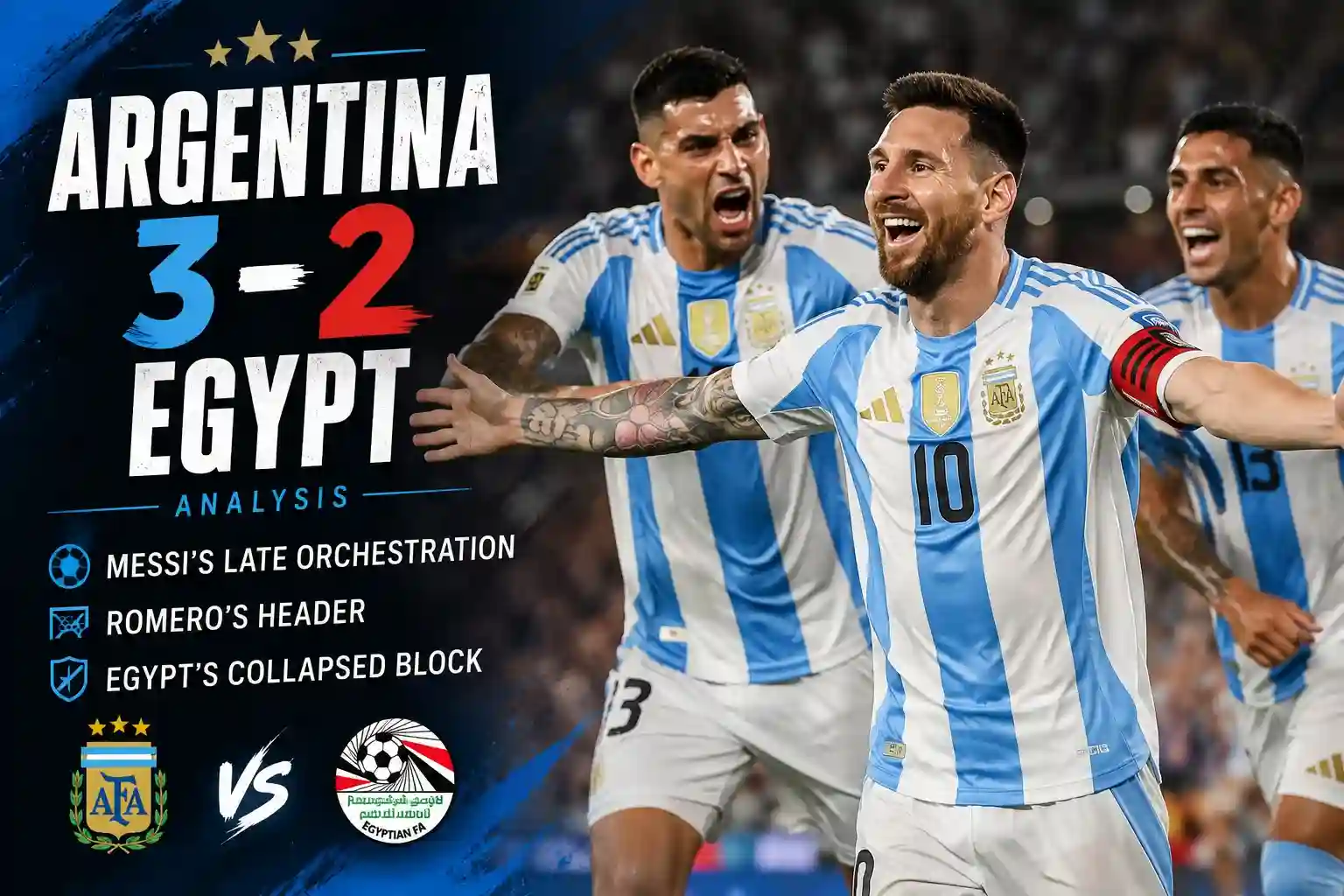
How Argentina Completed the 3-2 Comeback in Atlanta
Argentina overturned the 2-0 deficit through a concentrated eleven-minute assault that shattered Egypt’s defensive organization late in the second half. Egypt’s control seemed absolute after Yasser Ibrahim and Mostafa Zico capitalized on transitional chaos to establish a two-goal cushion. The North African side maintained this advantage through seventy minutes of disciplined defending until the 79th minute, when Cristian Romero rose to meet Lionel Messi’s precise cross and halve the deficit. Four minutes later, sustained pressure involving Lautaro Martínez and Gonzalo Montiel created the opening for Messi to slot home the equaliser, shifting the momentum entirely before Enzo Fernández arrived at the far post to convert Lautaro’s right-sided delivery deep into added time.
Lionel Messi’s earlier failure from the penalty spot in the opening phase threatened to define the evening as another tale of squandered opportunity under elimination pressure. The captain’s psychological recovery became the narrative pivot, transforming initial frustration into the decisive orchestration of Argentina’s revival through calibrated passing and spatial manipulation in the final third. His cross for Romero and the composed finish for the equalizer demonstrated problem-solving capabilities that transcended the earlier miss.
Argentina’s second consecutive 3-2 knockout victory mirrored their extra-time survival against Cape Verde in the previous round. This pattern suggests a high-risk, high-reward approach to elimination football where defensive vulnerability is traded for attacking volume when trailing, raising questions about sustainability as the tournament progresses into deeper stages against more disciplined opposition.
Tactical Analysis: Scaloni’s Attacking Shift vs Egypt’s Collapsed Block
Lionel Scaloni’s tactical adjustment to a more aggressive 4-1-3-2 structure in the final twenty minutes overwhelmed Hossam Hassan’s previously effective low block. The Argentina manager positioned Messi and Julián Álvarez as dual reference points in attack, supported by a midfield that pushed significantly higher up the pitch as the match wore on. Substitutes provided more direct access to the penalty area, bypassing Egypt’s compact midfield lines through vertical passing and wide overloads that exposed tiring legs in the Pharaohs’ defensive unit.
Hossam Hassan organized his side in a disciplined 4-4-2 formation that successfully contained Argentina’s creative threats for seventy minutes, utilizing Mohamed Salah and Omar Marmoush as rapid transition outlets to relieve pressure. The critical error materialized after securing the 2-0 cushion, when the defensive line dropped too deep and surrendered midfield control, creating the spatial conditions for Argentina’s late surge. Egypt’s retreat invited the very pressure their compact shape had previously denied.
Salah and Marmoush exposed systemic weaknesses in Argentina’s defensive spacing during the first half, vulnerabilities that Switzerland will certainly analyze before the quarter-final. The Albiceleste’s emotional volatility and tendency to lose structural discipline when defending against fast breaks present exploitable targets, suggesting that while the attack carries them through tight matches, the defensive foundation shows cracks under sustained transition pressure.
Quarter-Final Implications and What’s Next for Kenyan Fans
The 3-2 result in Atlanta raises questions about whether Argentina demonstrated true champion mentality or merely masked defensive deficiencies that Switzerland could exploit. Consecutive comeback wins involving three goals against Cape Verde and this recovery from 2-0 down against Egypt suggest resilience but also reveal a concerning dependence on late-game heroics. The emotional toll of navigating two high-stress elimination matches within days, combined with recurring lapses in defensive concentration, indicates potential fragility against organized opposition that controls possession.
Switzerland awaits in the quarter-final as a test of whether Argentina can impose control from the opening whistle rather than relying on reactive football. Egypt’s exit, despite breaking new ground by advancing from Group G with four points and reaching the Round of 16 for the first time in this tournament context, ends a historic campaign that included a penalty shootout victory over Australia following a 1-1 draw. The Pharaohs’ post-match frustration regarding VAR decisions and late penalty appeals formed part of the match context without suggesting officiating bias, reflecting the fine margins that decide knockout football.
Kenyan supporters should monitor the 2026 FIFA World Cup full schedule in Kenya Time to catch the quarter-final fixture in East Africa Time, with kick-off details available on Pulser’s dedicated portal. The Pulser FIFA World Cup hub provides continuous coverage of all knockout progression and team updates. Readers seeking background on how the teams reached this stage can review all 2026 World Cup teams and groups to understand how Argentina secured nine points with a +7 goal difference to win Group J while Egypt’s four-point haul from Group G represented a milestone for the national team.