
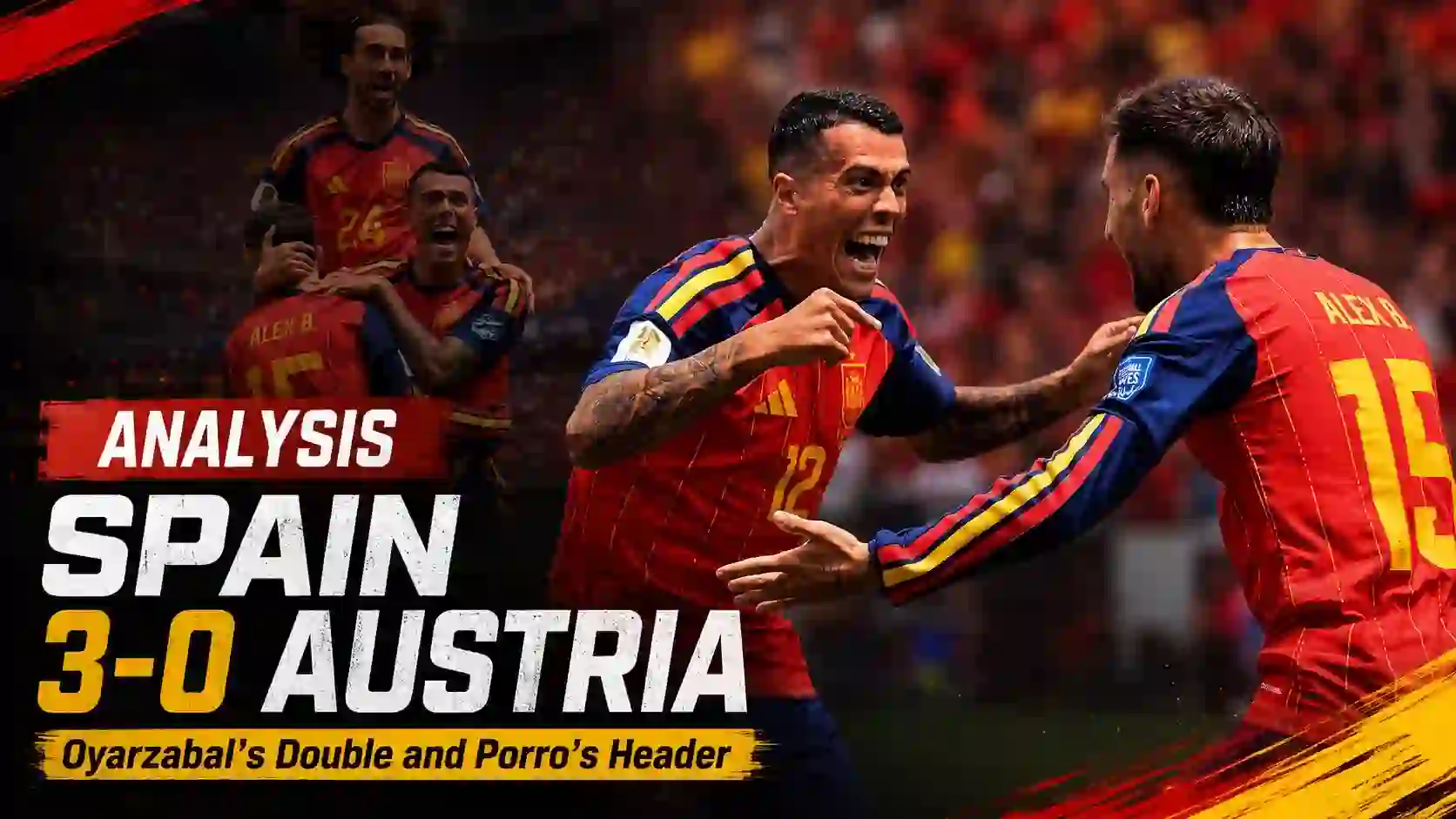
Spain 3-0 Austria: Match Result and Historic Defensive Display
Spain secured a dominant 3-0 victory over Austria in the Round of 32, advancing to the Round of 16 against Portugal while recording their first World Cup knockout win since defeating the Netherlands in the 2010 final. Mikel Oyarzabal’s clinical finishing provided the foundation for Spain’s triumph, with the Real Sociedad forward breaking Austrian resistance through a composed first-half finish before adding a second goal after the interval to confirm La Roja’s control of the elimination tie. Group H winners with seven points progressed without conceding a goal in the match, maintaining their defensive record from a group stage that included victories over Saudi Arabia and Uruguay plus a draw with Cape Verde.
Pedro Porro’s thunderous header from a wide delivery extended the margin to three goals, demonstrating Spain’s aerial threat against an Austrian defensive block that had been stretched horizontally by the movement of De la Fuente’s attacking players. The Tottenham full-back’s aerial finish capitalized on Austria’s inability to track runners into the box while dealing with the width provided by Spain’s wingers.
Spain’s backline achieved a historic defensive performance by becoming the first team in the expanded 48-team format to prevent an opponent from recording a single shot on target in a knockout match. Unai Simón remained untested throughout the 90 minutes despite Rangnick’s reputation for aggressive attacking football, a testament to the positional discipline that has characterized Spain’s campaign since arriving in North America.
Tactical Analysis: De la Fuente’s Pressing Masterclass vs Rangnick’s High Line
Luis de la Fuente dismantled Ralf Rangnick’s high-pressing system through aggressive counterpressing and superior positional control that suffocated Austria’s build-up play before it could reach Spain’s defensive third. De la Fuente’s tactical approach demanded immediate pressure after losing possession, with Spain’s forwards and midfielders collapsing on Austrian ball-carriers to win possession high up the pitch and prevent the transitional attacks that had driven Group J runners-up with four points past Jordan and earned a dramatic 3-3 draw with Algeria during the group stage.
Pedri’s technical security in central midfield, combined with Lamine Yamal’s width on the right flank and Dani Olmo’s intelligent movement between the lines, allowed Spain to bypass Austria’s attempted high press through short passing combinations rather than direct long balls. Rangnick’s pressing triggers proved ineffective against Spanish players comfortable receiving the ball under pressure and immediately finding third-man runners.
Spanish full-backs alternated between inverting into midfield to create numerical superiority and overlapping wide to stretch Austria’s defensive block, creating the corridors through which Oyarzabal and the attacking midfielders could penetrate the box before Austrian defenders could recover their defensive shape. This positional fluidity prevented Austria from establishing the compact defensive structure necessary to withstand sustained Spanish pressure.
Road to the Quarter-Finals: Portugal vs Spain and the Contender Question
Spain’s path to the World Cup quarter-finals now runs through a high-stakes Iberian derby against Portugal, a matchup that will test whether the dominant 3-0 performance against Austria proves their genuine title credentials or merely exploited favorable tactical matchups. De la Fuente’s squad will face Portugal in the knockout stage bracket after topping their group, setting up a clash against the Group I runners-up that represents a significant step up in quality from the Austrian challenge.
The Spain coach issued a pointed warning against complacency in his post-match comments, stating that “satisfaction can kill” to underscore his concern that such a comfortable victory might breed overconfidence before facing Portuguese opposition capable of punishing any defensive lapses. De la Fuente emphasized that the knockout stage demands continued focus, particularly against a Portugal side possessing individual match-winners who can bypass tactical systems through sheer quality.
The debate surrounding Spain’s status in the tournament centers on whether this performance demonstrated the completion of De la Fuente’s tactical project, combining defensive solidity with attacking ruthlessness, or if Rangnick’s decision to press high simply played into the technical strengths of a Spanish system designed to exploit exactly such aggressive defensive approaches. The Round of 16 clash with Portugal will provide the definitive answer, as Spain face opponents unlikely to gift them possession through failed pressing traps.